
Blog – To Europe LLC
This is the always timely and exciting blog, kept current by To Europe owner Thomas Giesick and his camera during his many travels.
At To Europe LLC, our mission is to provide professional, pre-arranged tours for independent traveling guests. This includes self-guided travel itineraries in order to experience truly memorable impressions and encounters during your visit to Europe.
Alp Mountains (Zugspitz area) – Daytrip by Rail from Munich
Sep. 23rd, 2014
Times are very busy in Munich with the Oktoberfest taking place and I decided to take some time out in the Alp Mountains. The Zugspitze is Germany´s highest mountain (9,718 ft.) and the area around Garmisch-Partenkirchen is known for some of the best skiing slopes in Germany.Now it is September and I will show you that this is also a great destination in the summer time and well worth visiting if you have an extra day in Munich.
There is a direct train from Munich to Garmisch-Partenkirchen and it only takes less than 1.5 hours to get into the mountain resort, where the Winter Olympics took place in 1936. Hitler suggested forming the town of Garmisch-Partenkirchen out of the villages of Garmisch and Partenkirchen to make the town more attractive to the International Olympic Committee. A new town hall was built to unite the town villages (the inhabitants from both villages did not like each other too much…).
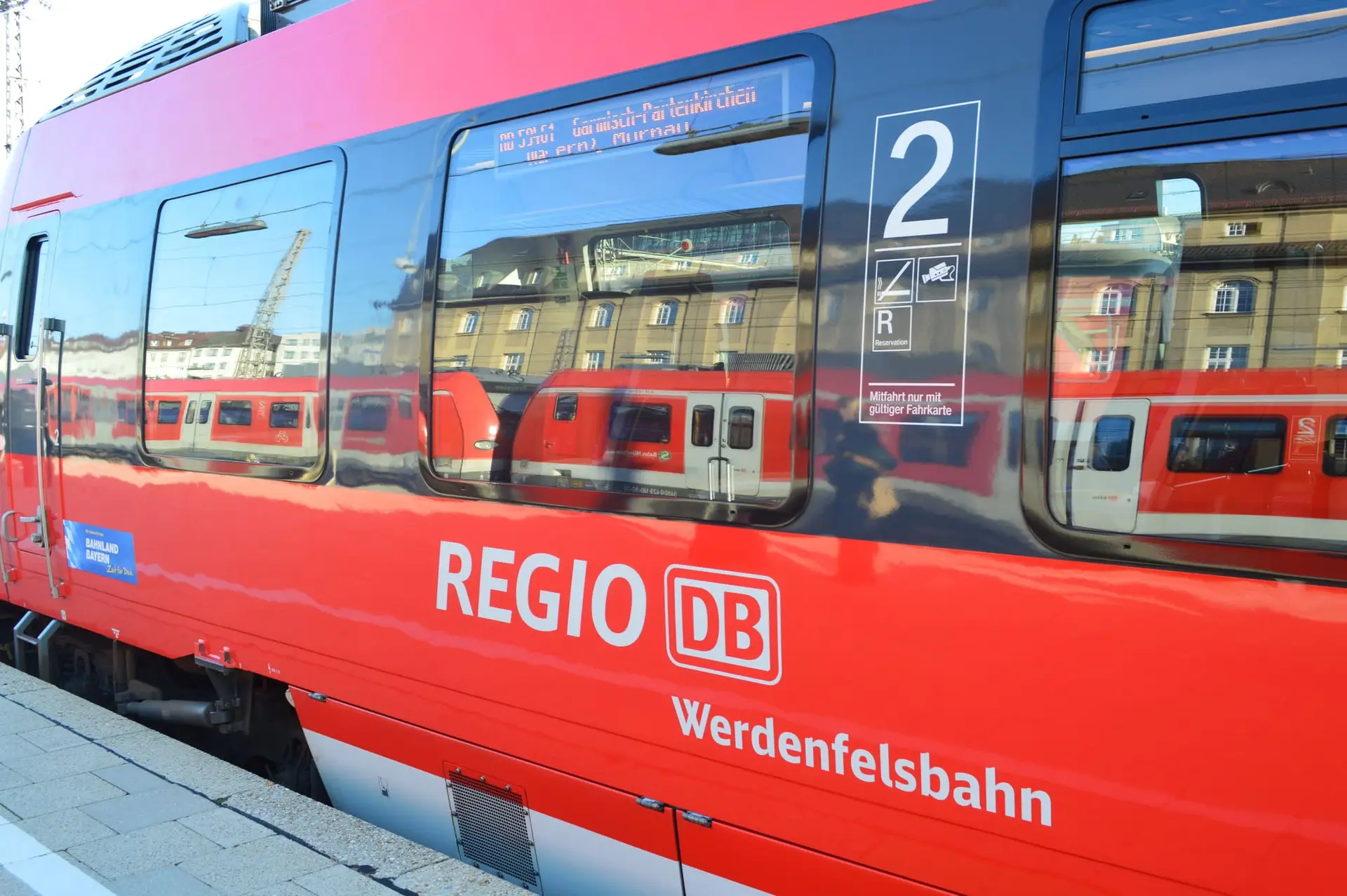
I started my tour from Munich Main Station at 9:30 am. The Werdenfelsbahn, which takes you into the Garmisch area (also called “Werdenfelser Land”) departs from the regional part of Munich Main Station which is located in a side building of the station.
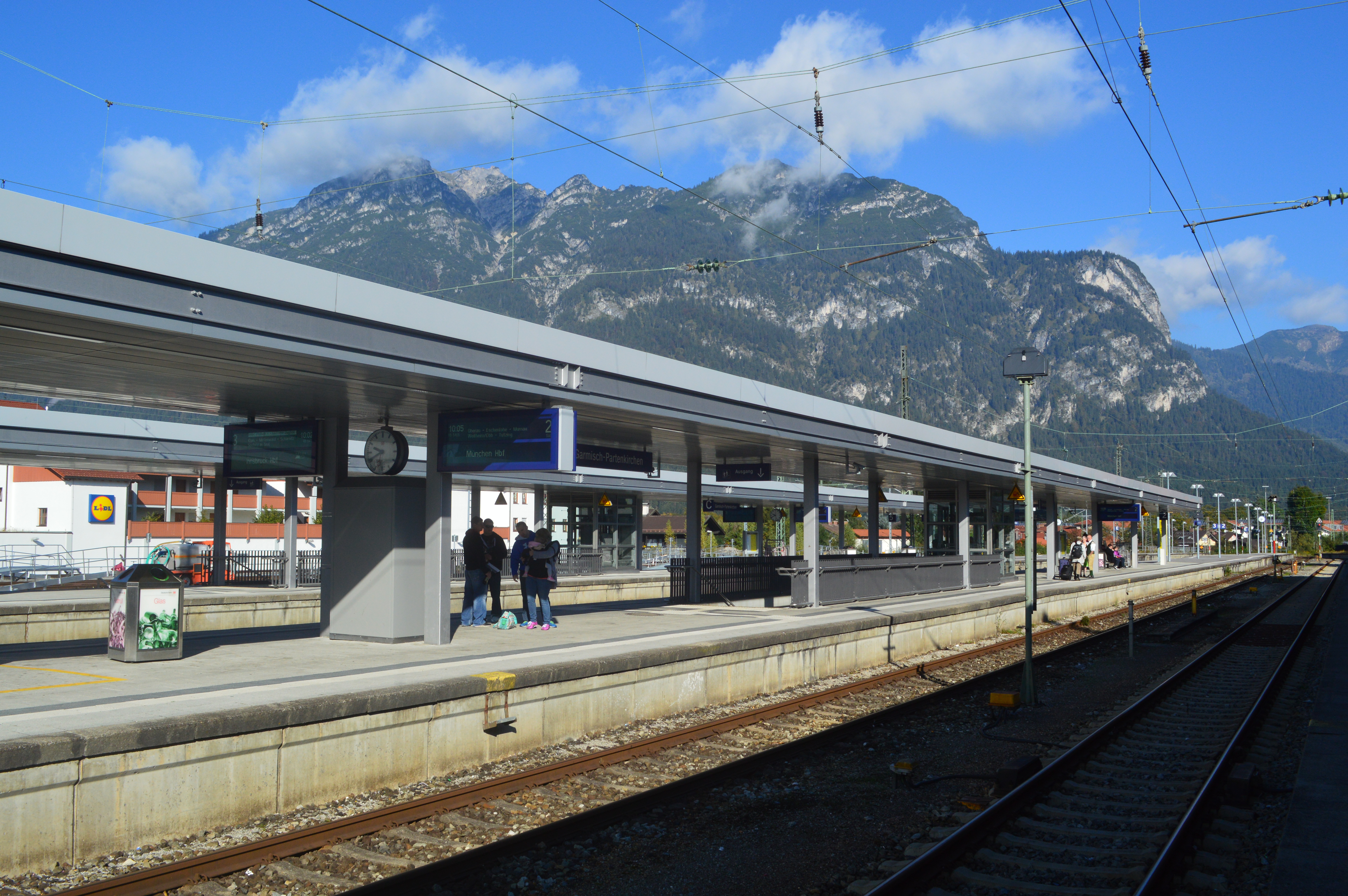
The train goes south and passes Lake Starnberg (you want to take a seat on the left hand side of the train). I arrived at the Station in Garmisch-Partenkirchen a little before 11am.
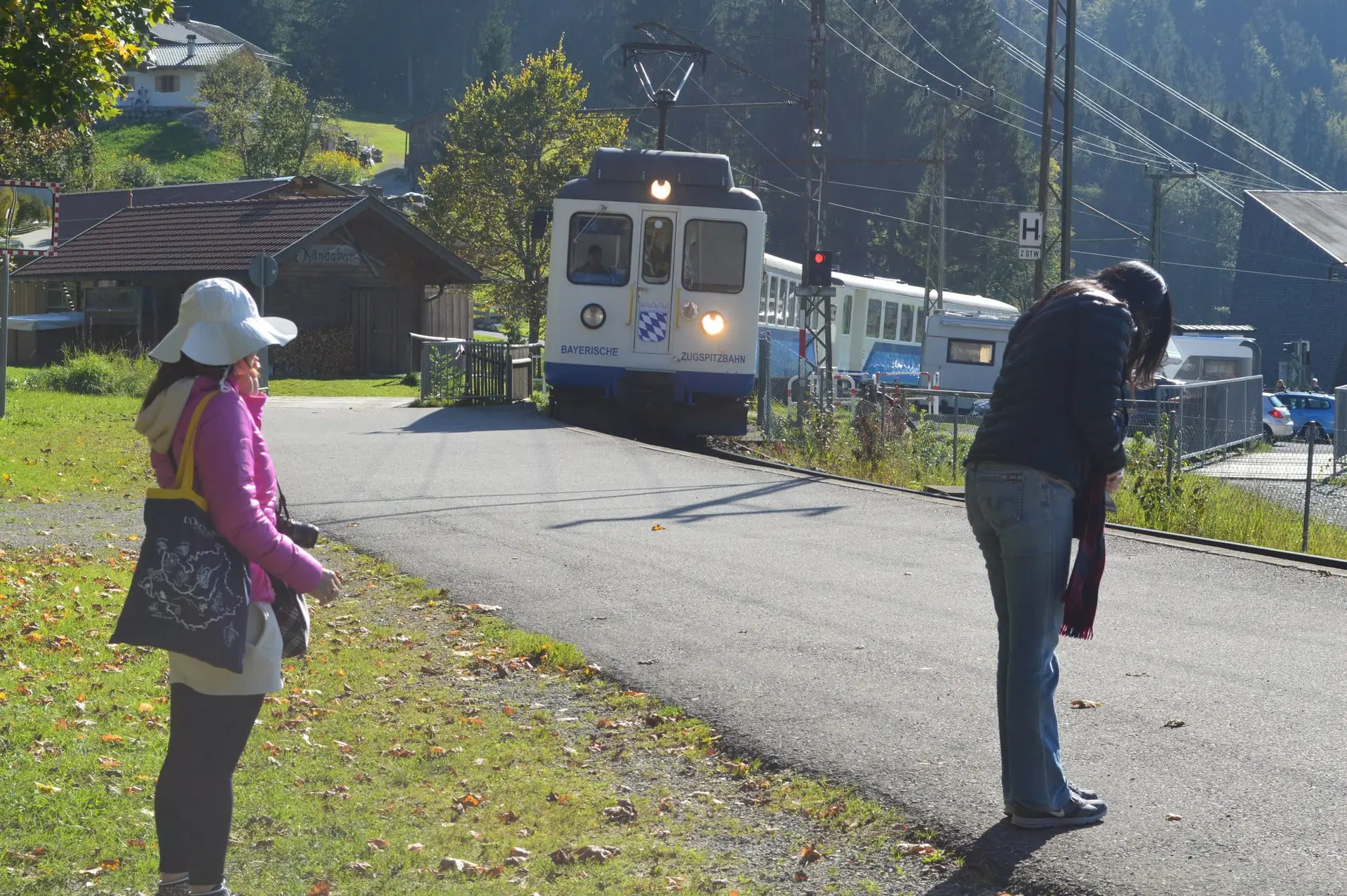
I took the underpass not towards the Station Building but in the opposite direction where at 11:15 am the historic Zugspitzbahn took me in just about 10 minutes to the station “Kreutzeck-Alpsitzbahn”.
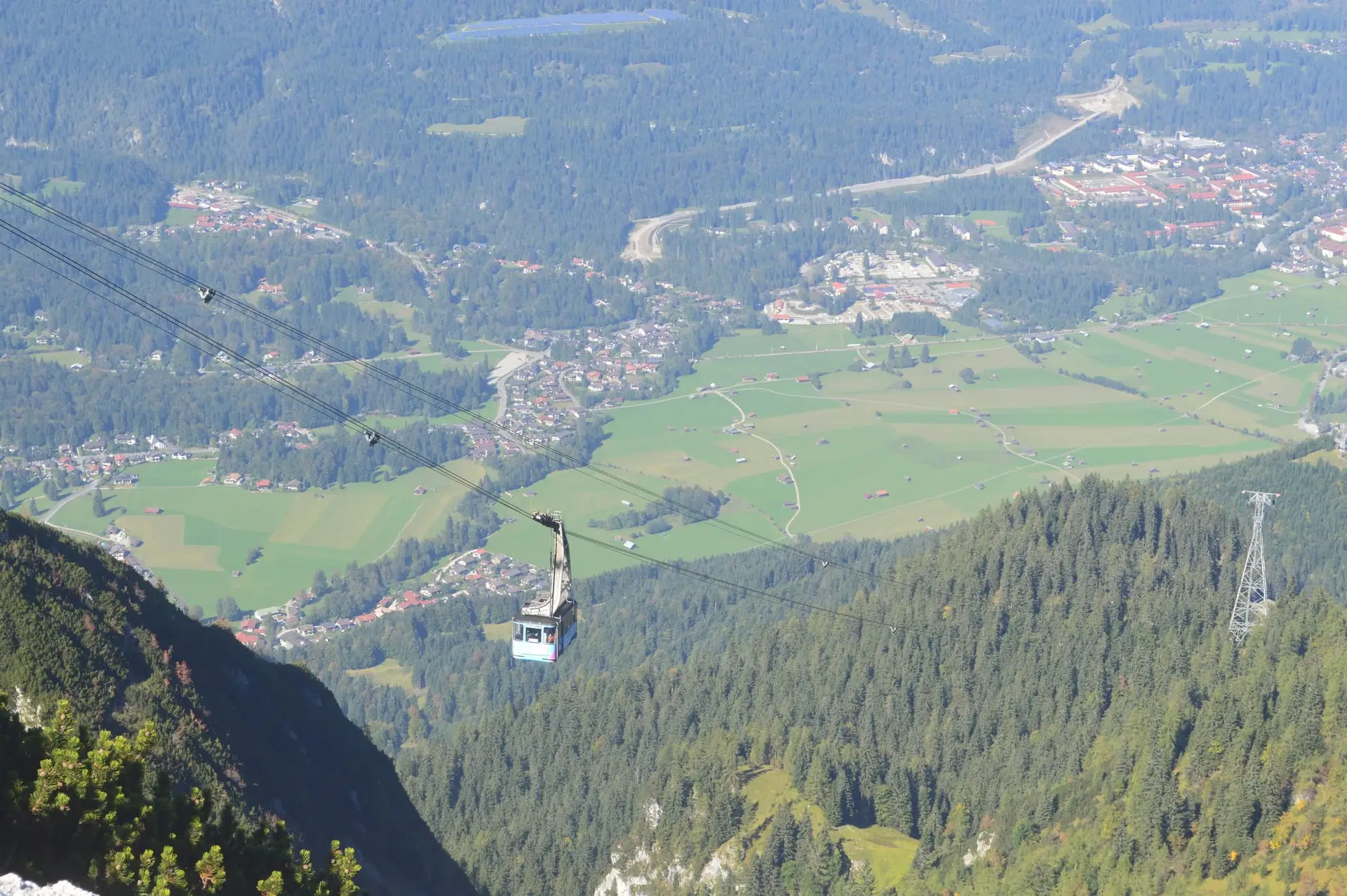
From the station I first took the Kreutzeckbahn cable up to the Kreutzeck (5,417 ft.). The ride takes less then ten minutes and you have a nice view over the area of Garmisch-Partenkirchen going uphill.[clear]
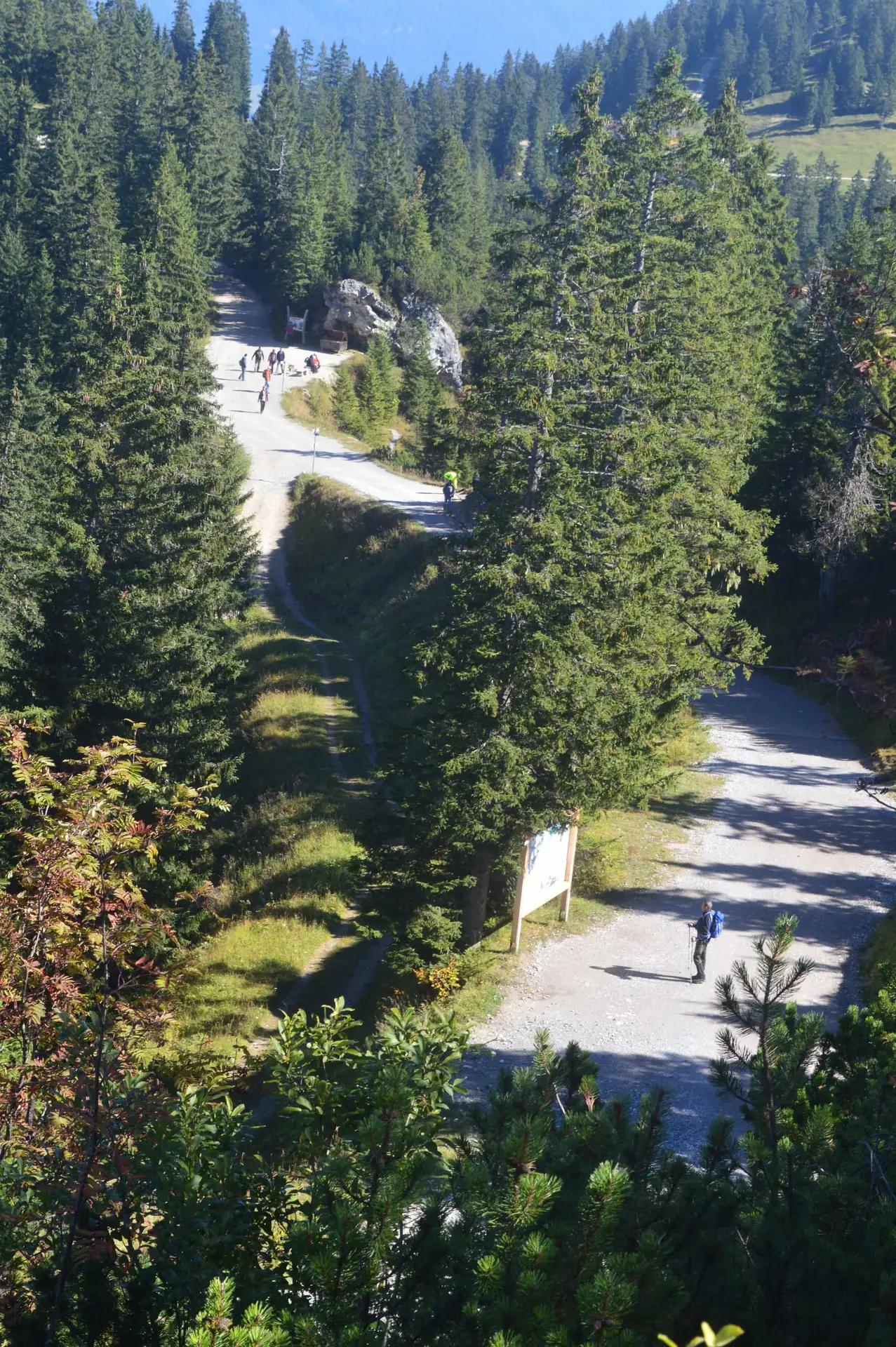
From the Kreutzeck you have the choice to take an easy hike to the Hochalm (easy to walk, takes 30 minutes) or you can also take a more ambitious (but still sneaker ok hike (if you have dry weather conditions) which is more scenic and takes 60 minutes. Of course there are more difficult hikes for climbers using climbing irons for snow covered slopes or glacier and I met a local who just came back from a morning hike telling me that it had snowed on the other side of the mountain and he was glad he was carrying his equipment along.[clear]
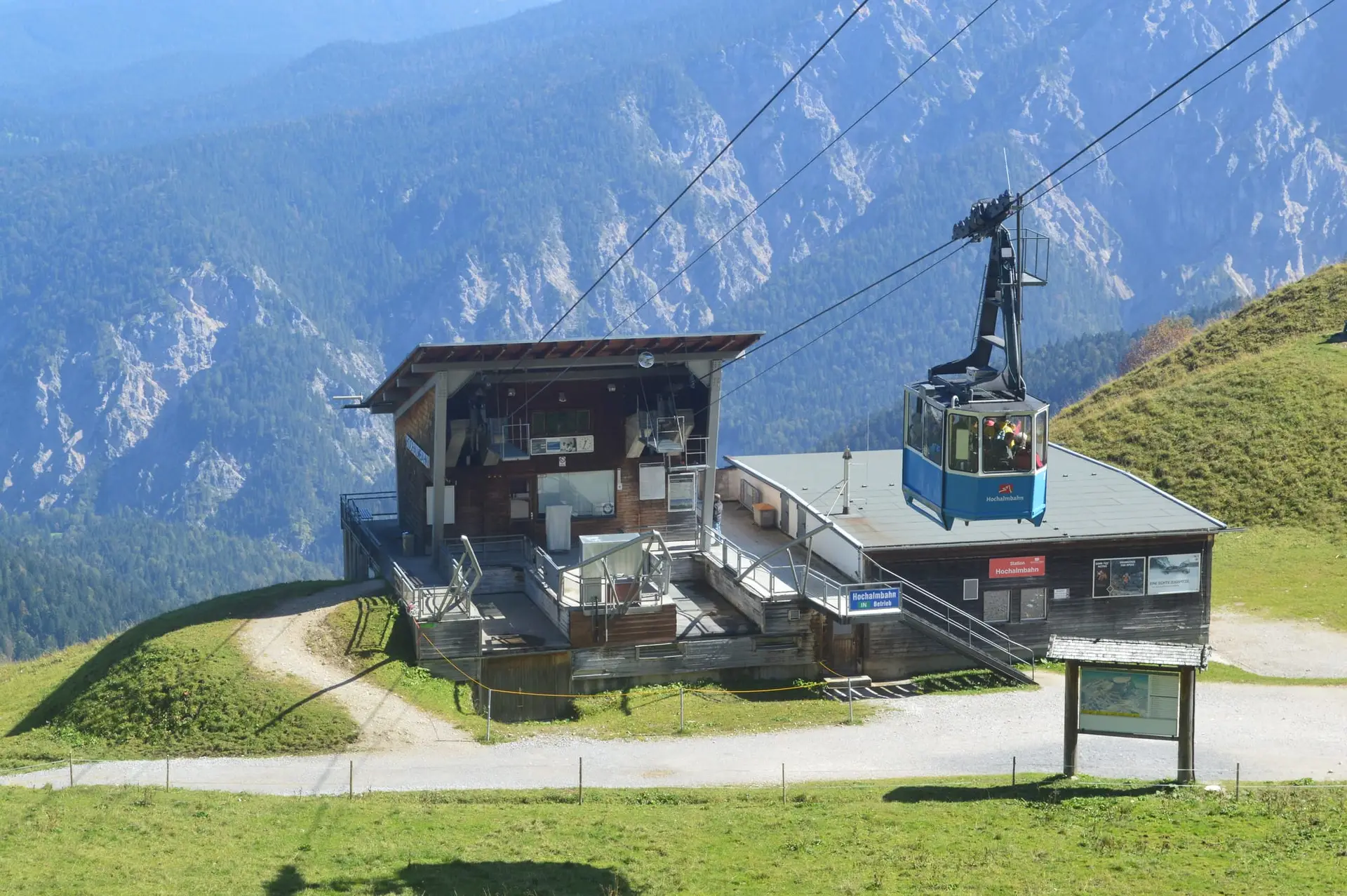
I took the 60 minute hike – which went across a hilltop which was very nice – and came down on the other side right above the station of the Hochalmbahn.
[clear]
[clear]
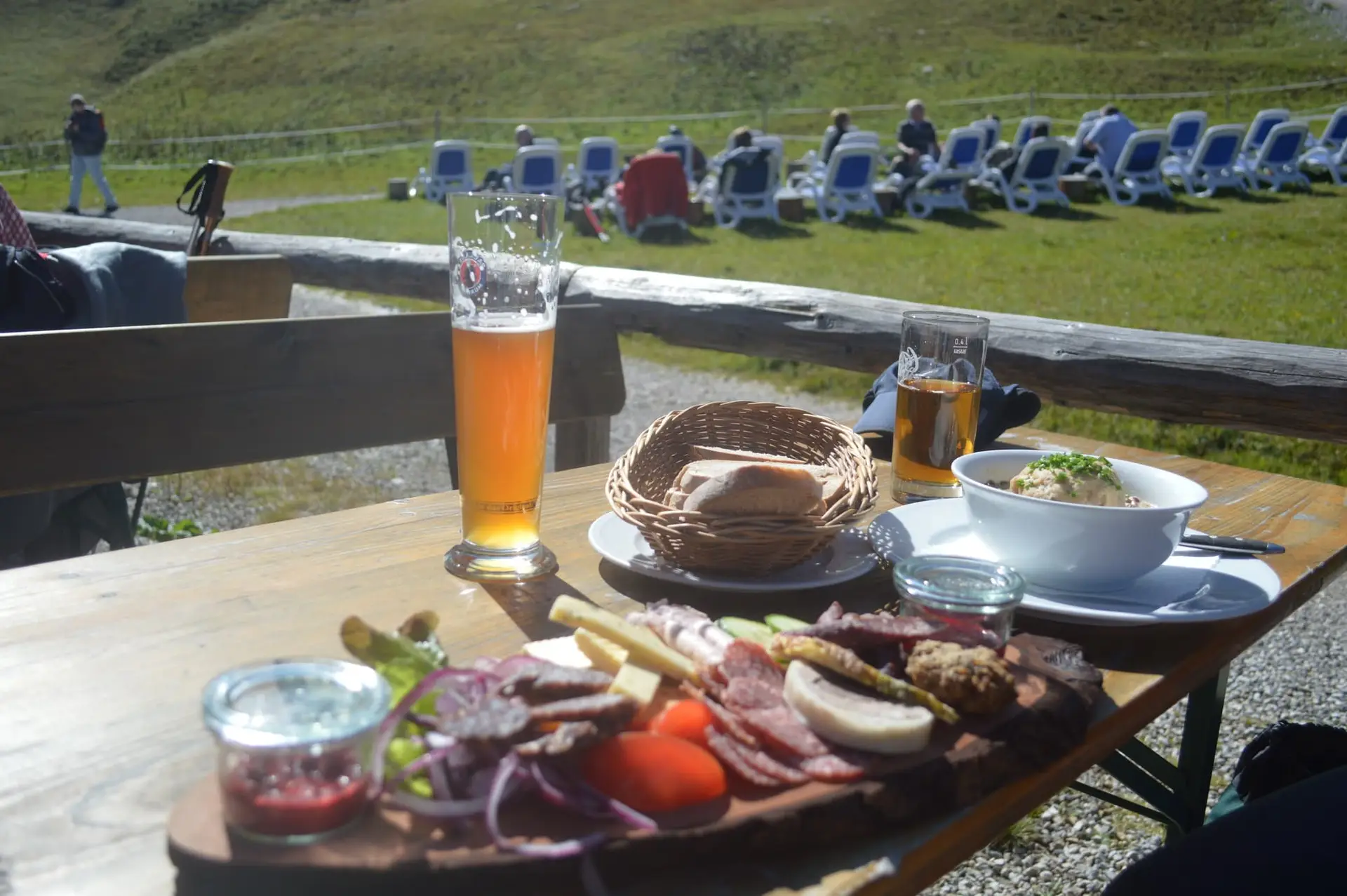
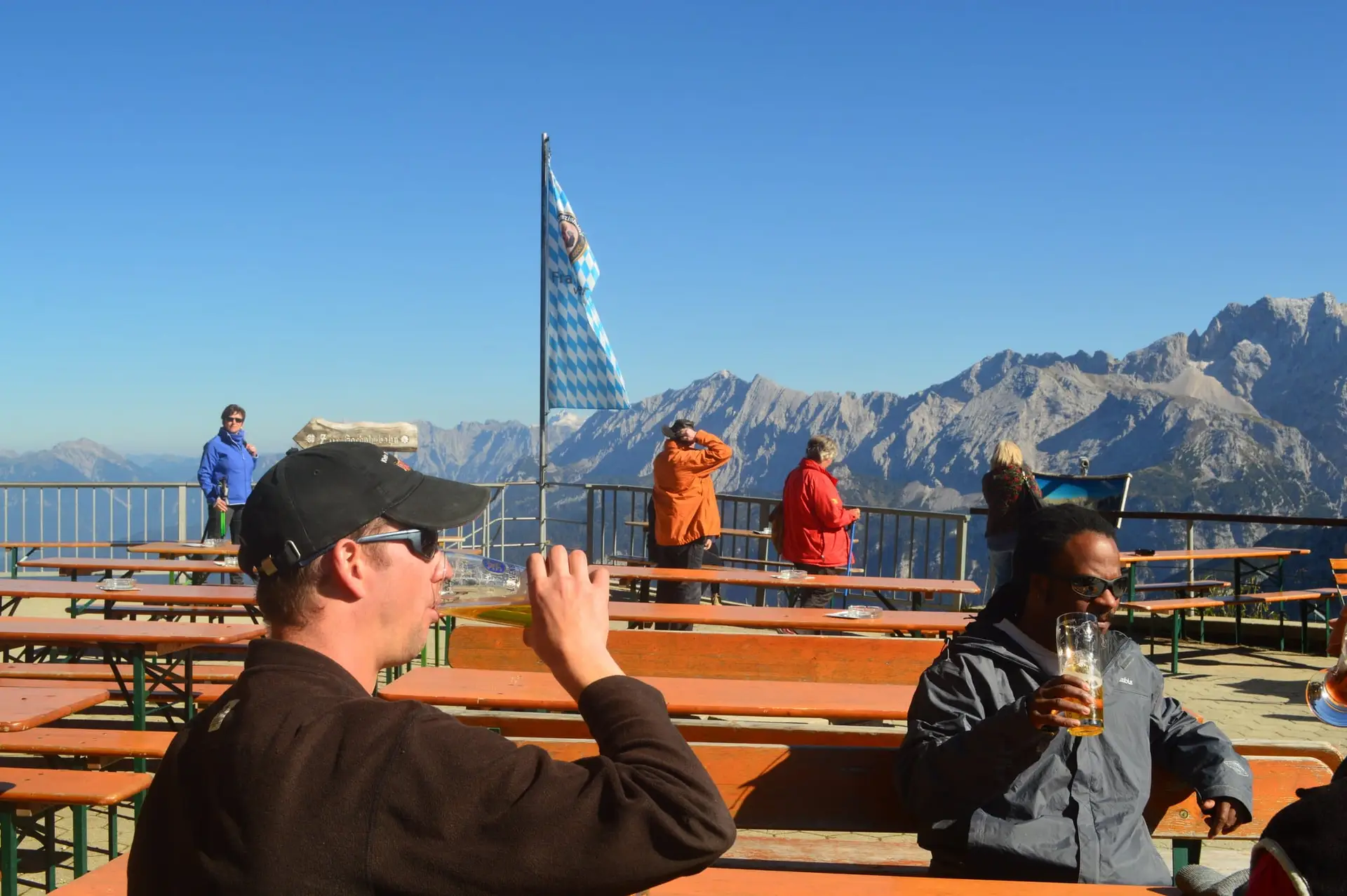
Right at the Hochalm Station is the Hochalm with a nice Biergarten – I did not do much hiking yet but the weather was great and the Hochalm is a great place for lunch anyway … I ordered the “Wildbret(t)” (which I can highly recommend) and a “Weizen” Beer (I prefer non-alcoholic which you usually can get in Bavaria everywhere but you can also have a regular Weizen or a “Helles” (a “bright” beer similar to the Pils). Our guests often ask about the prices: a Weizen comes in a half liter glas which is about 2.1 US pint and the price at the mountain is about Euro 3.50 which is roughly US $ 4.50. The Wildbrett is Euro 12.90 (about US $ 16.70.[clear]
[clear]
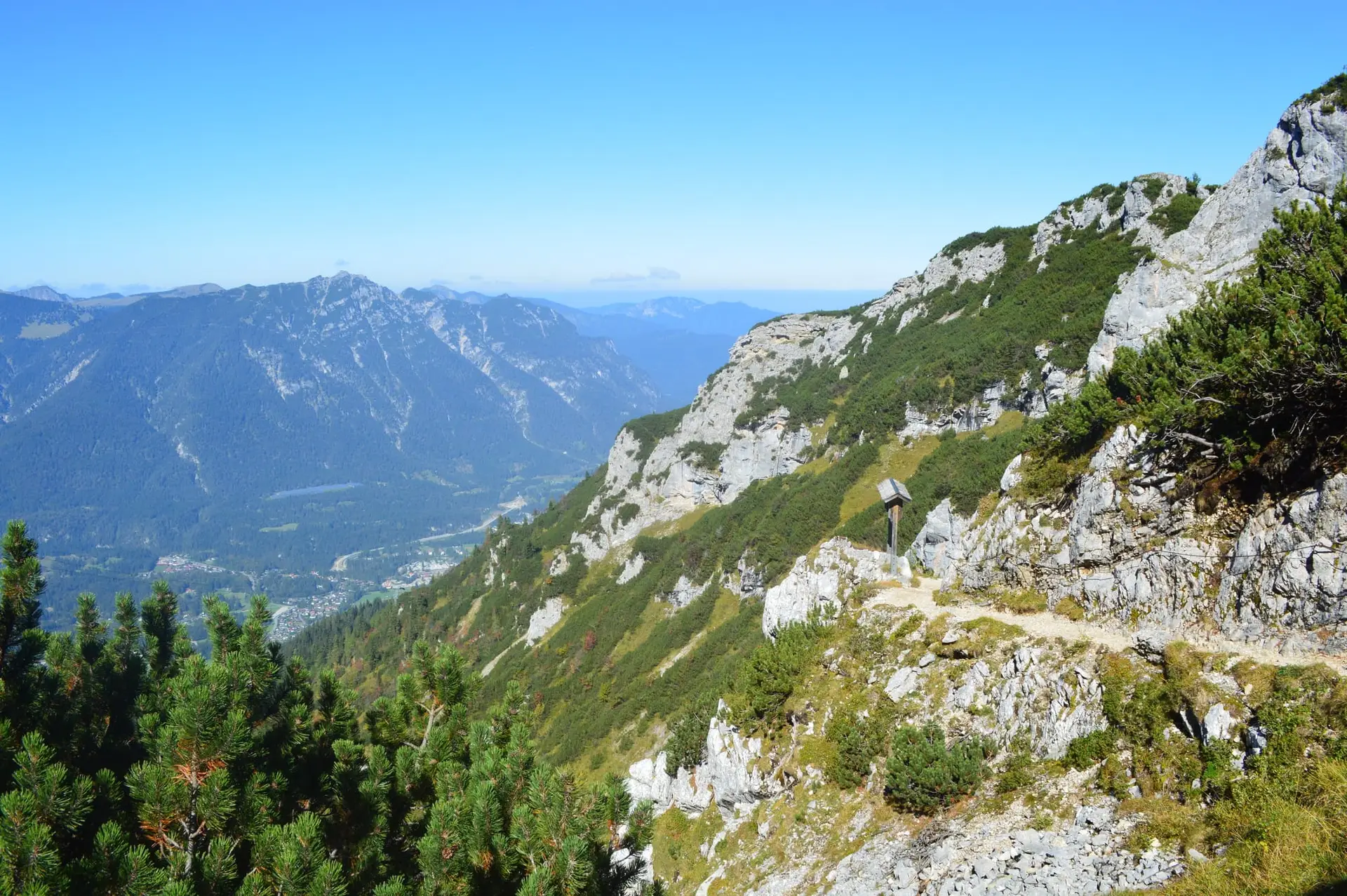
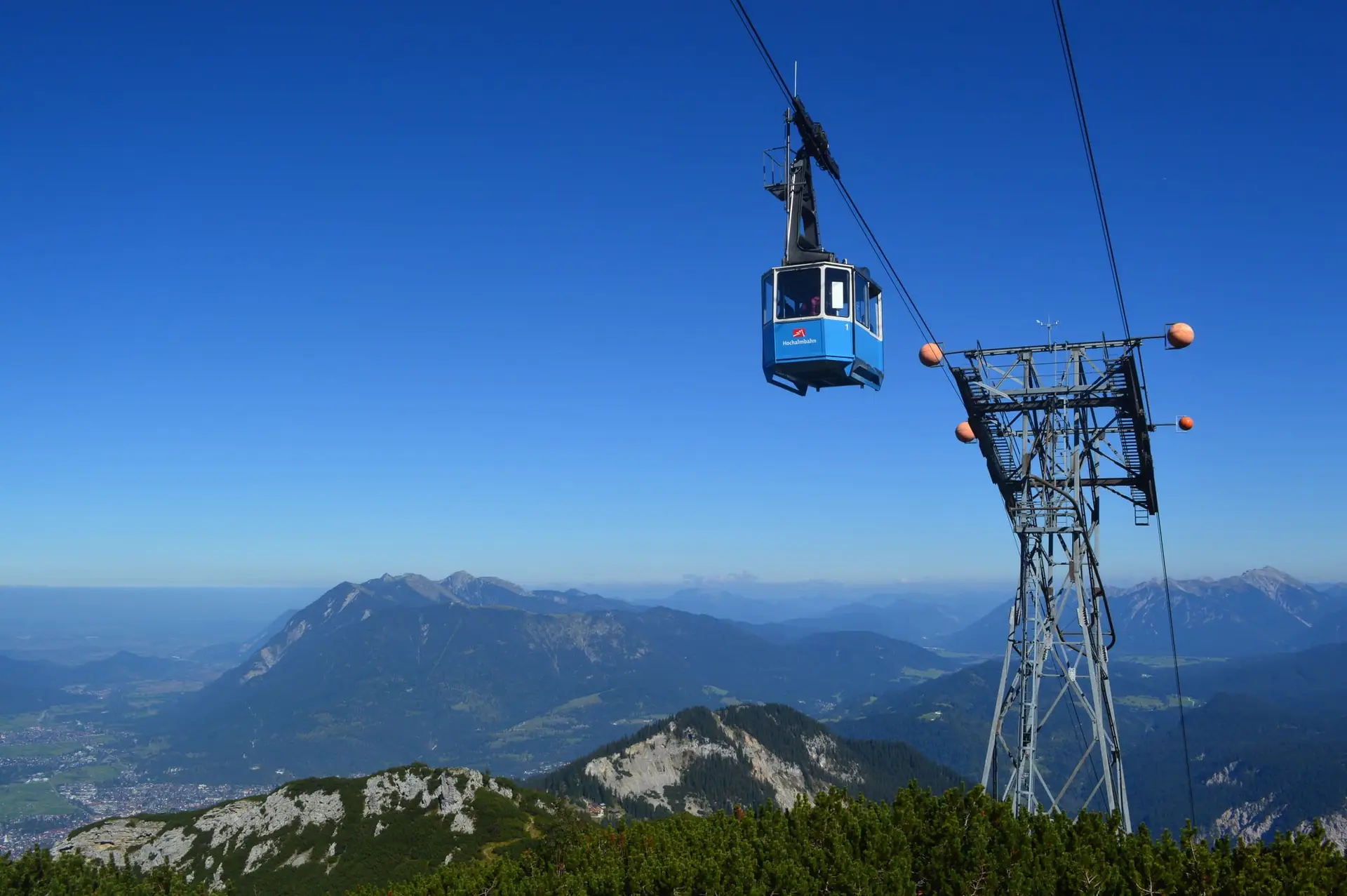
After lunch you can take the Hochalmbahn Cable Car from the Hochalm to the Osterfelderkopf. This takes about 10 minutes and you have some spectacular views out of the cable car taking you from one peak to the other. Another oprion is to take a fairly easy to walk hike. Of course – after my hearty dish I decided for the third option which is a more ambitious hike from the Hochalm across the Hupfleitnerjoch to the Osterfelderkopf.[clear]
[clear]
Again, the hike is fine with sneakers is the weather is dry. If you follow the path you have some nice mountain views – especially you look right at the Zugspitze – Germany´s highest mountain. The vegetation smells beautiful up here – with flowers and the mountain pine along the way. During the hike I took I came cross the Hochalmbahn several times.
[clear]
[clear]
This time I was not sure if I should first enjoy the “views from an eagle’s perspective” from the AlpspiX or have another beer. To have a Biergarten even on top of the mountains is just great….
[clear]
[clear]
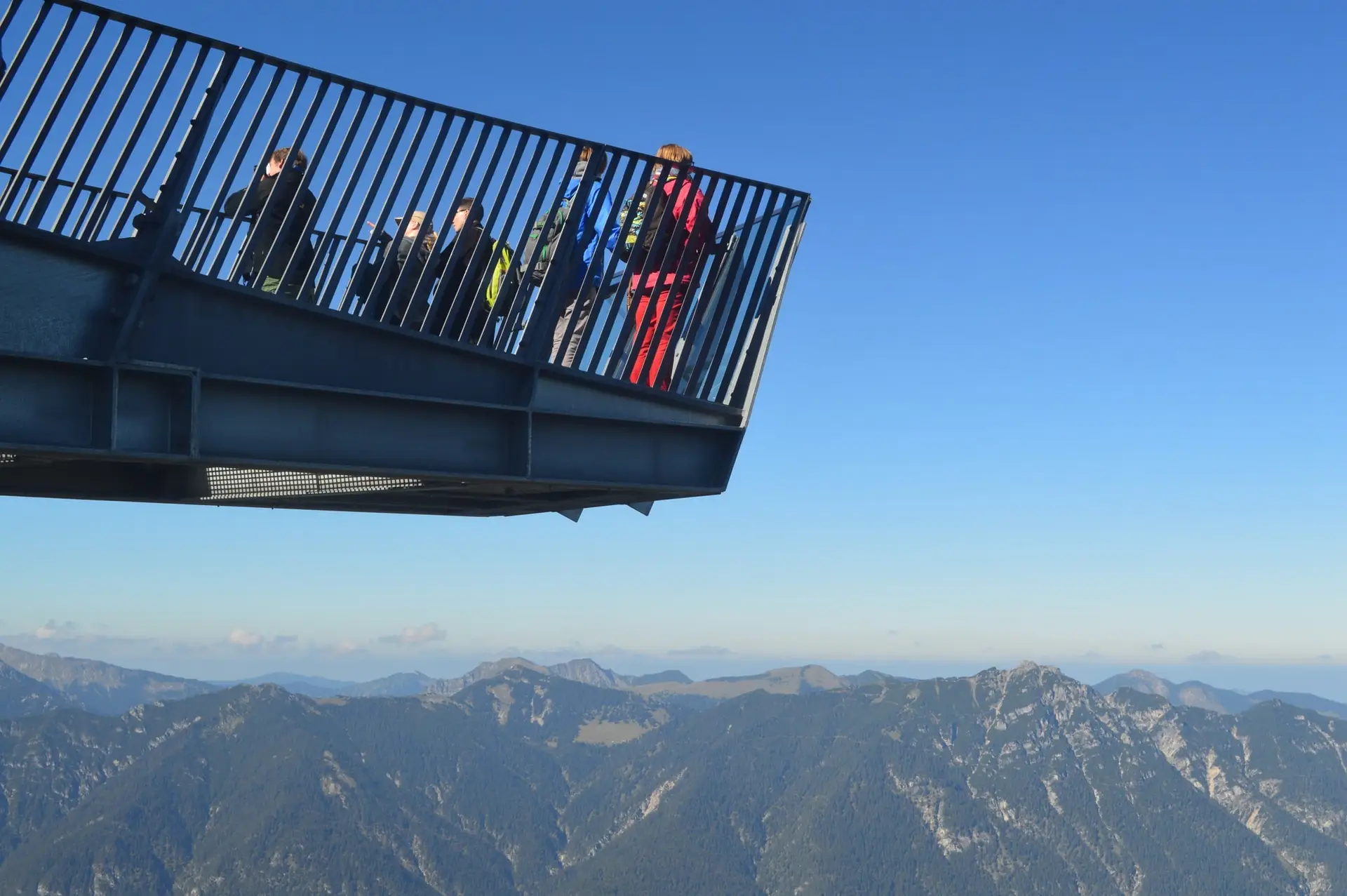
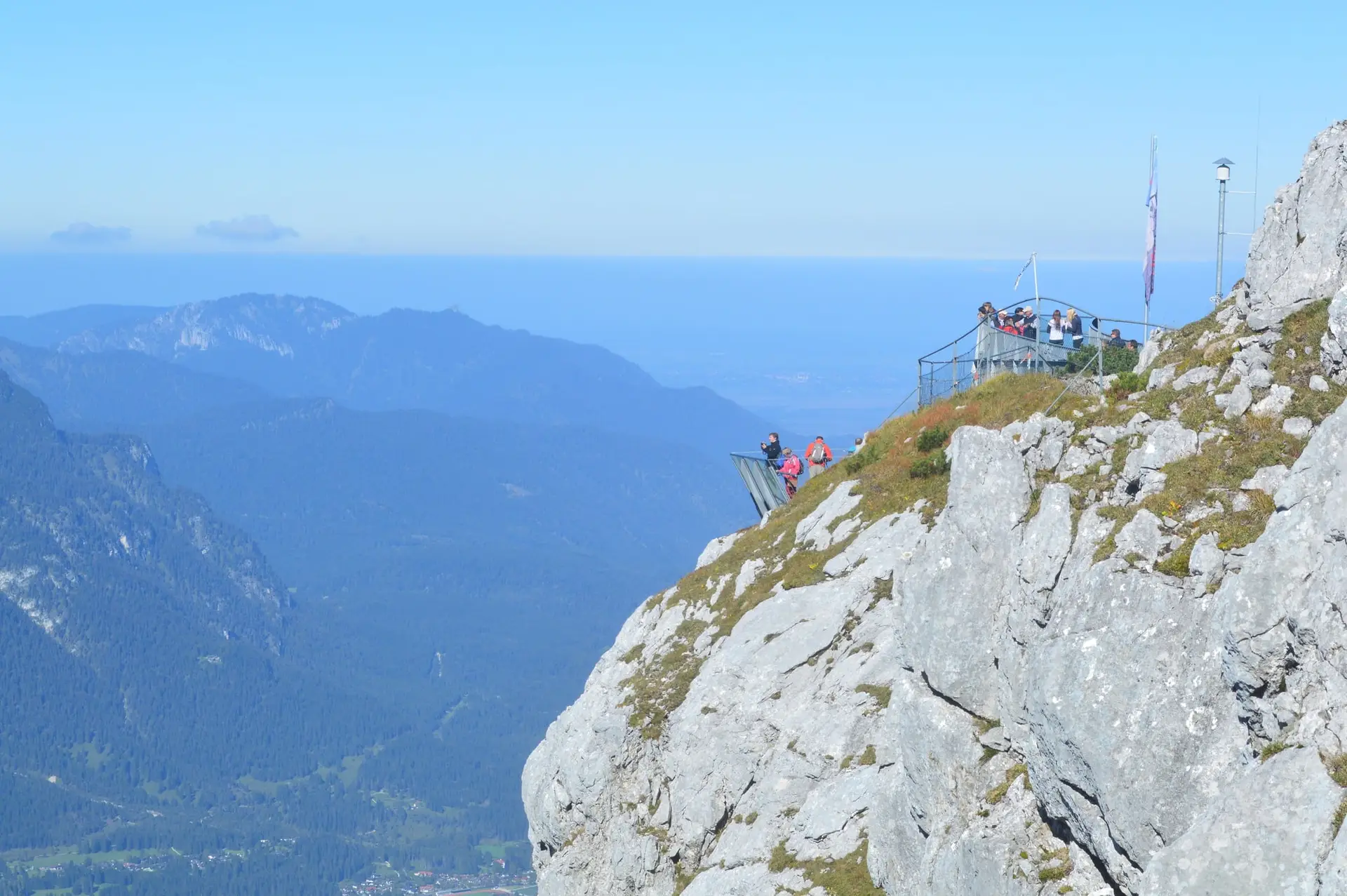
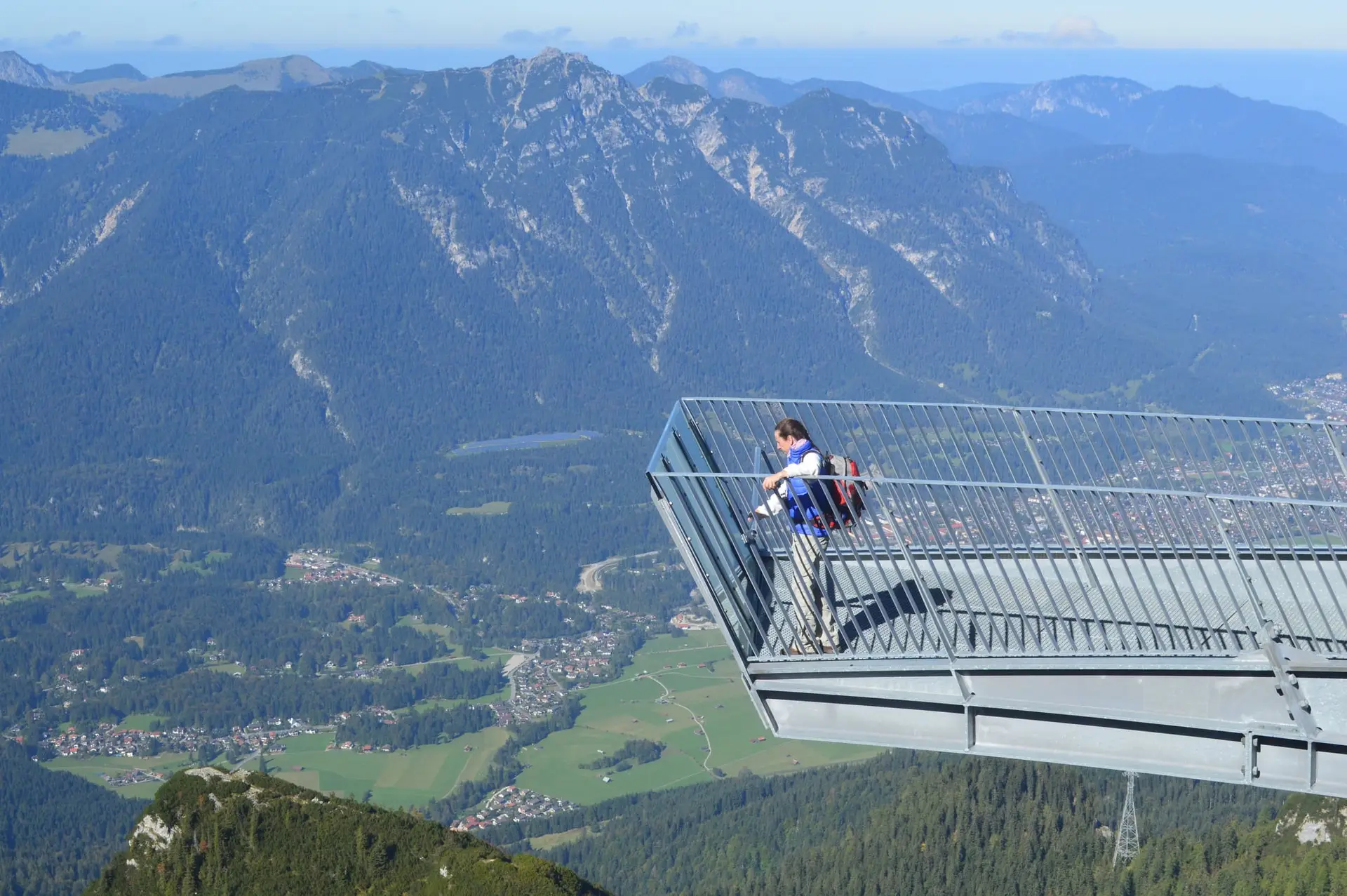
I then visited the AlpspiX (which is free of charge): two steel beams form a floating X over a vertical drop of more than 3,000 ft.. You have great views of the “Höllental” below and also of the (mostly) snow covered Zugspitze which is just across from the Osterfeldkopf.
[clear]
[clear]
[clear]
The Alpspitzbahn takes about 10 minutes back down to Kreutzeck-Alpsitzbahn from where the Zugspitzbahn takes you back to Garmisch.
[clear]
[clear]
[clear]
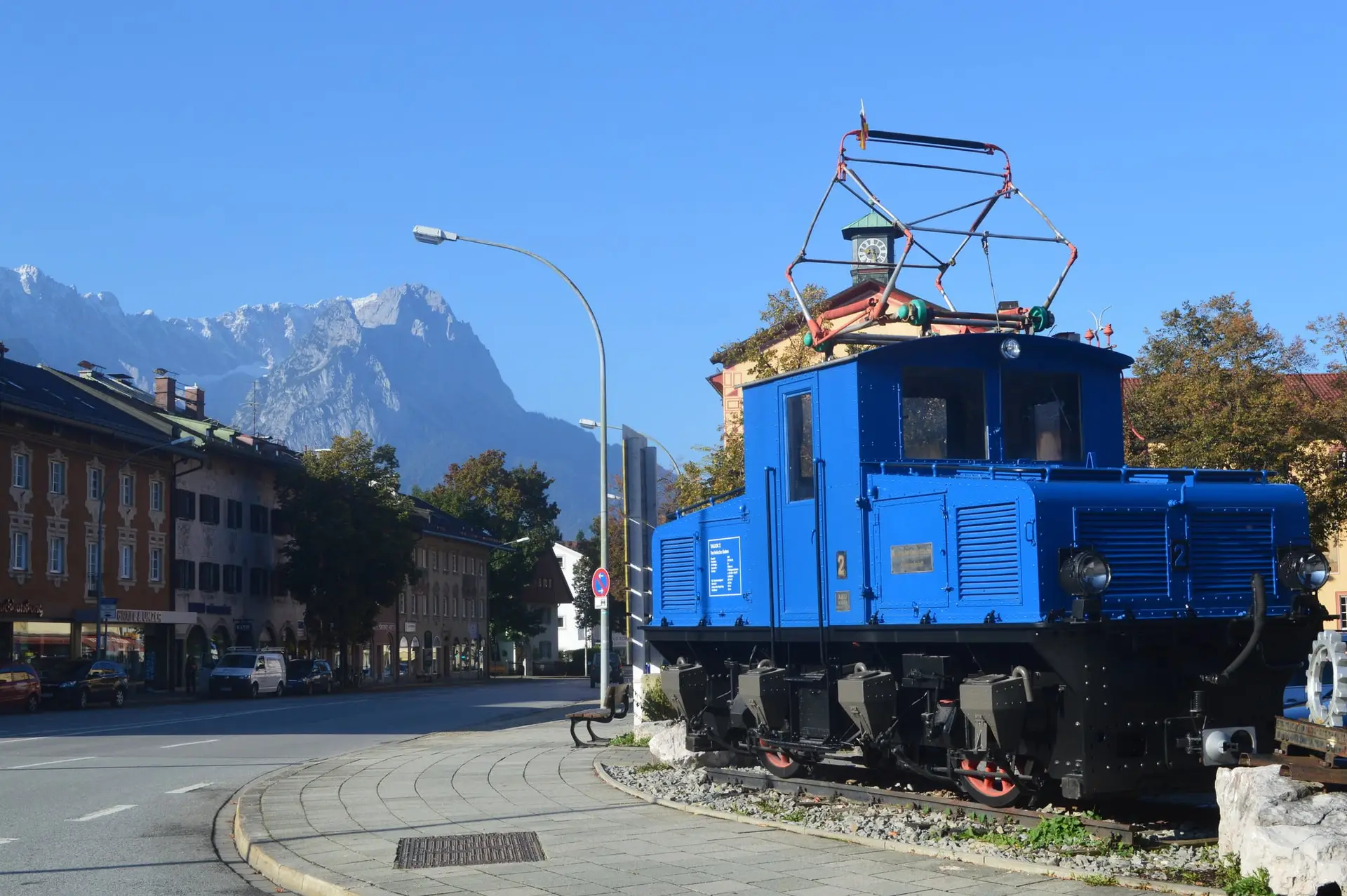
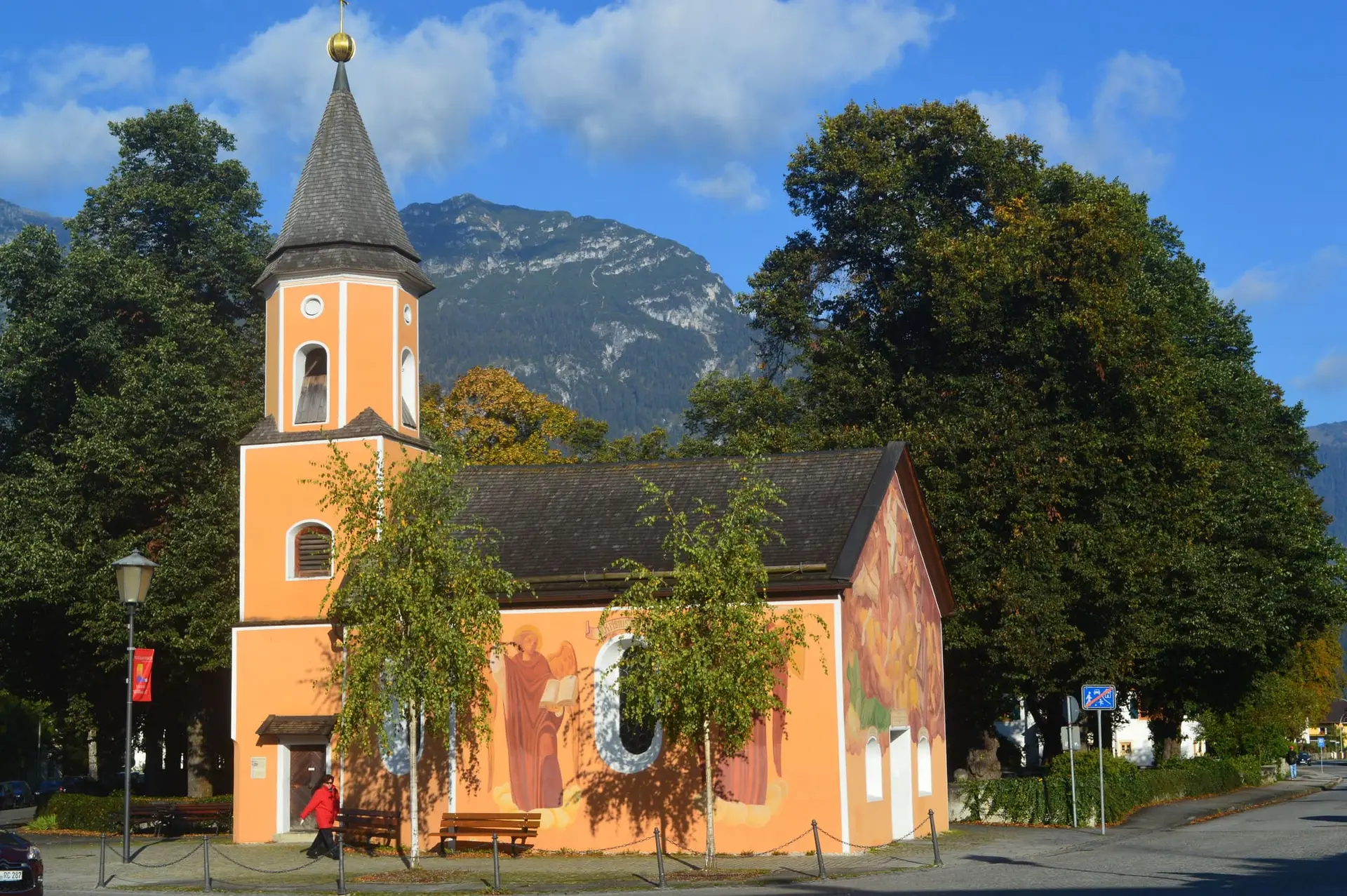
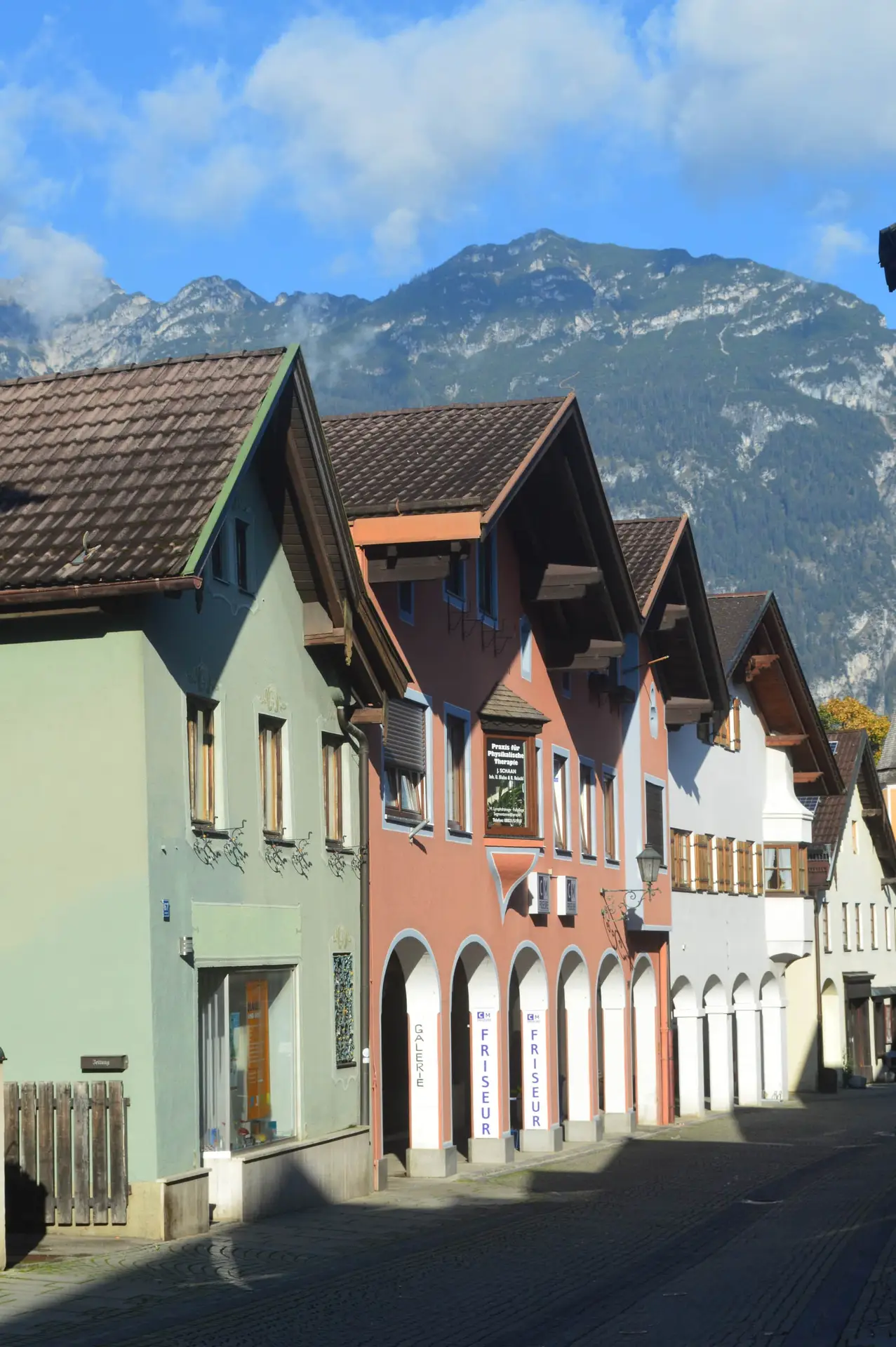
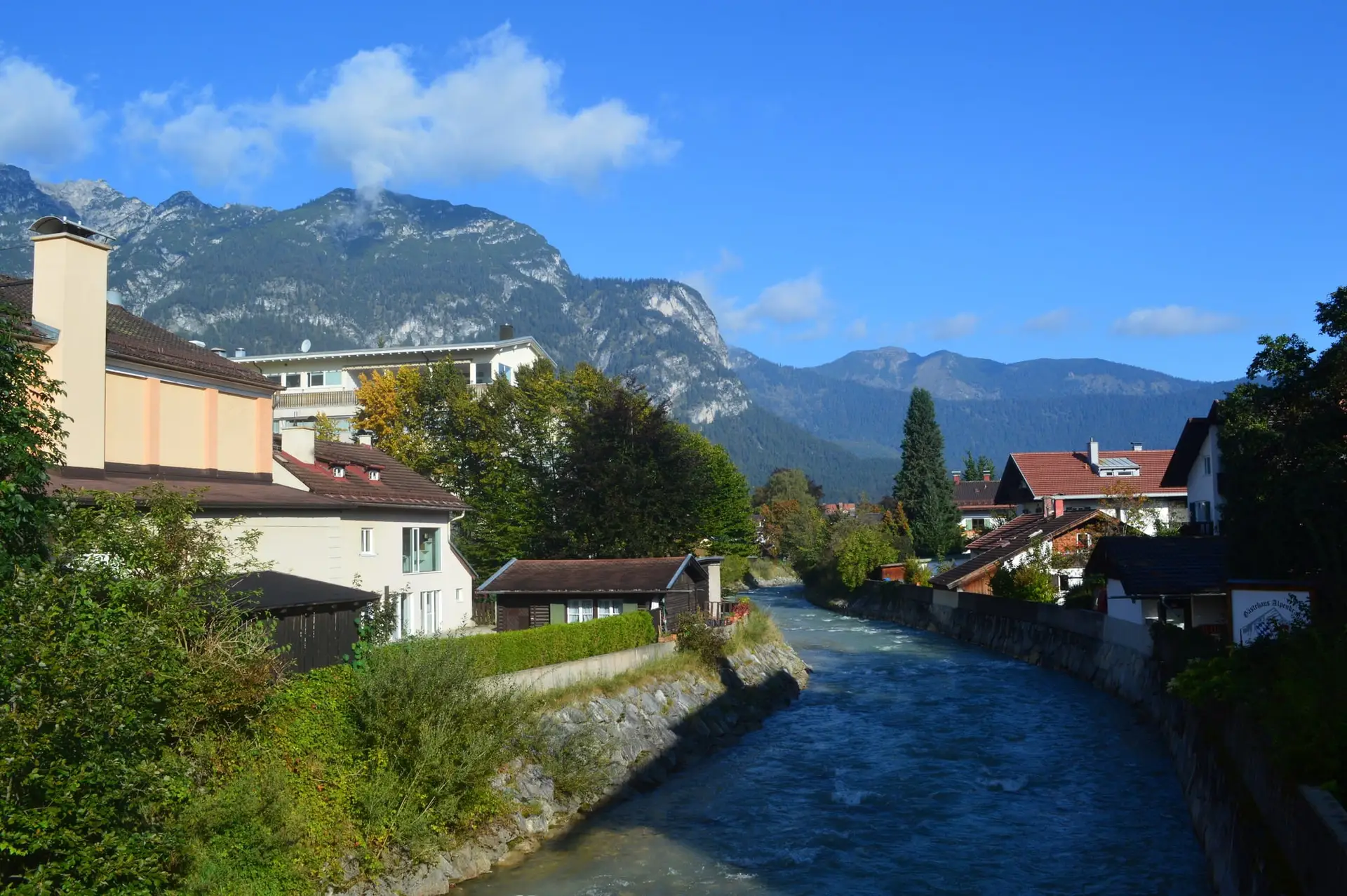
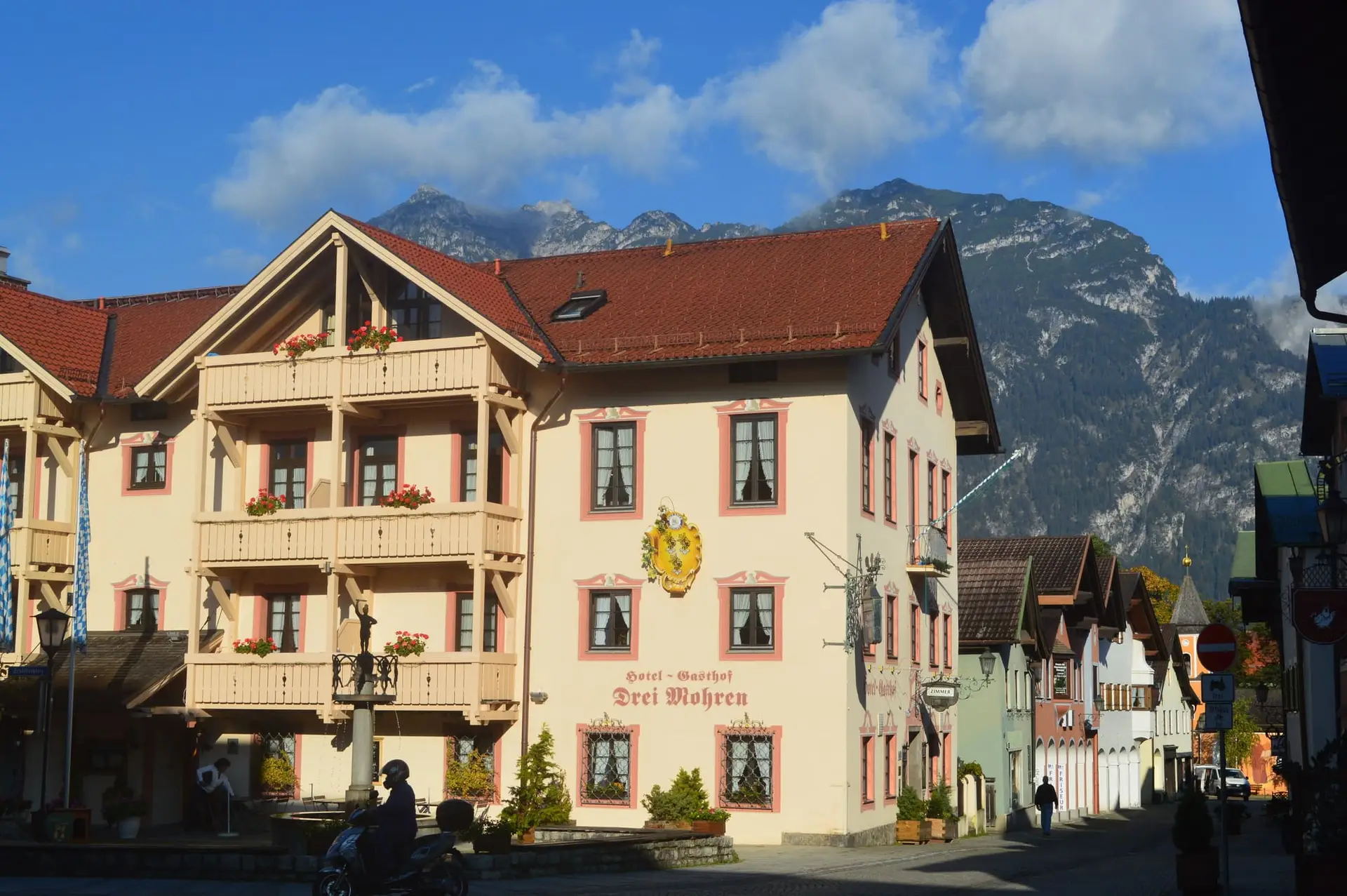
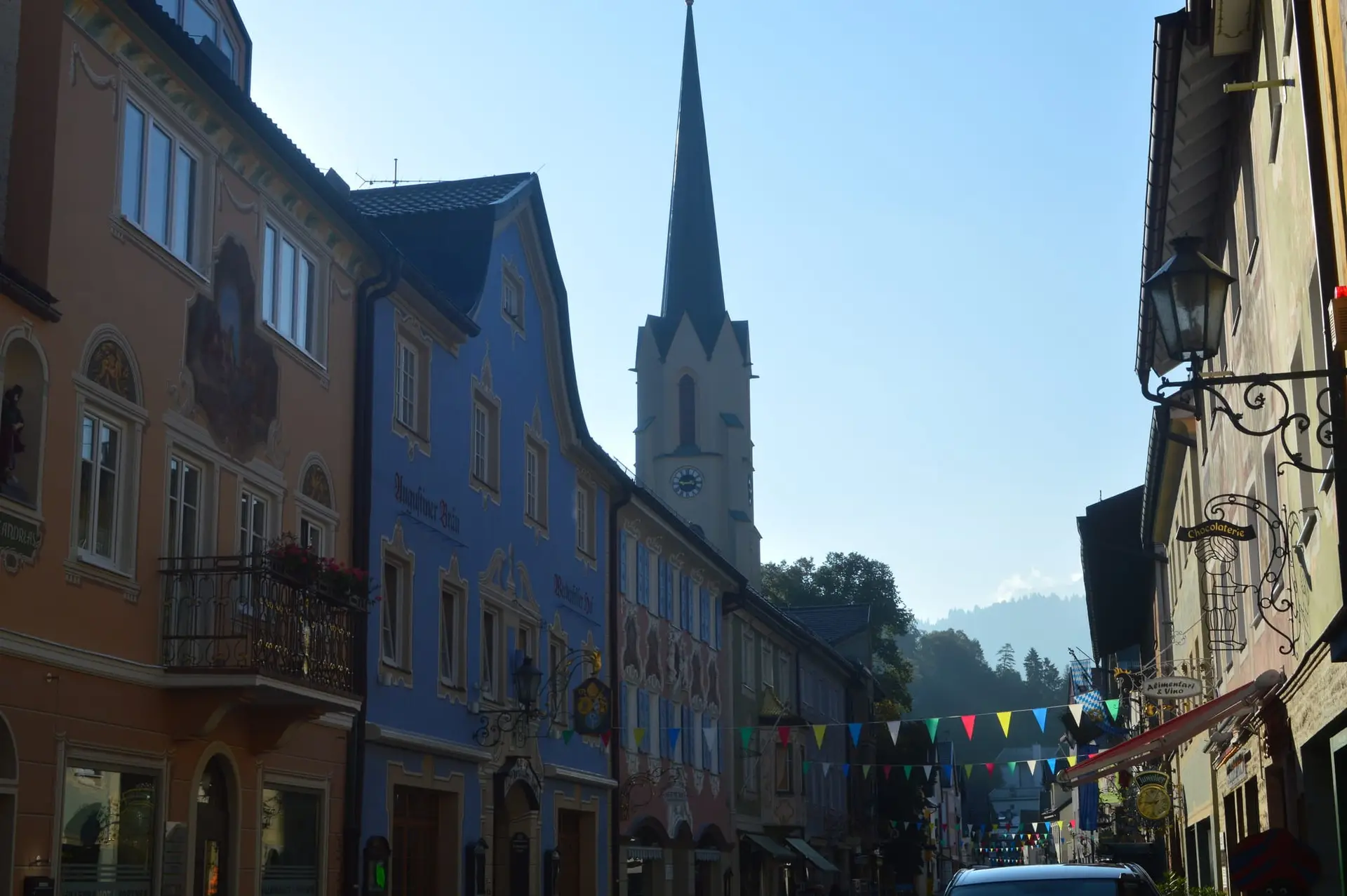
I was back in Garmisch-Partenkirchen a little before 4 pm so I had some time for sightseeing in Garmisch-Partenkirchen before I took the Werdenfels train back to Munich. Great day! Can easily be arranged from Munich if you have an extra day there.
[clear]
[clear]
[clear]
[clear]
[clear]
[clear]
[clear]
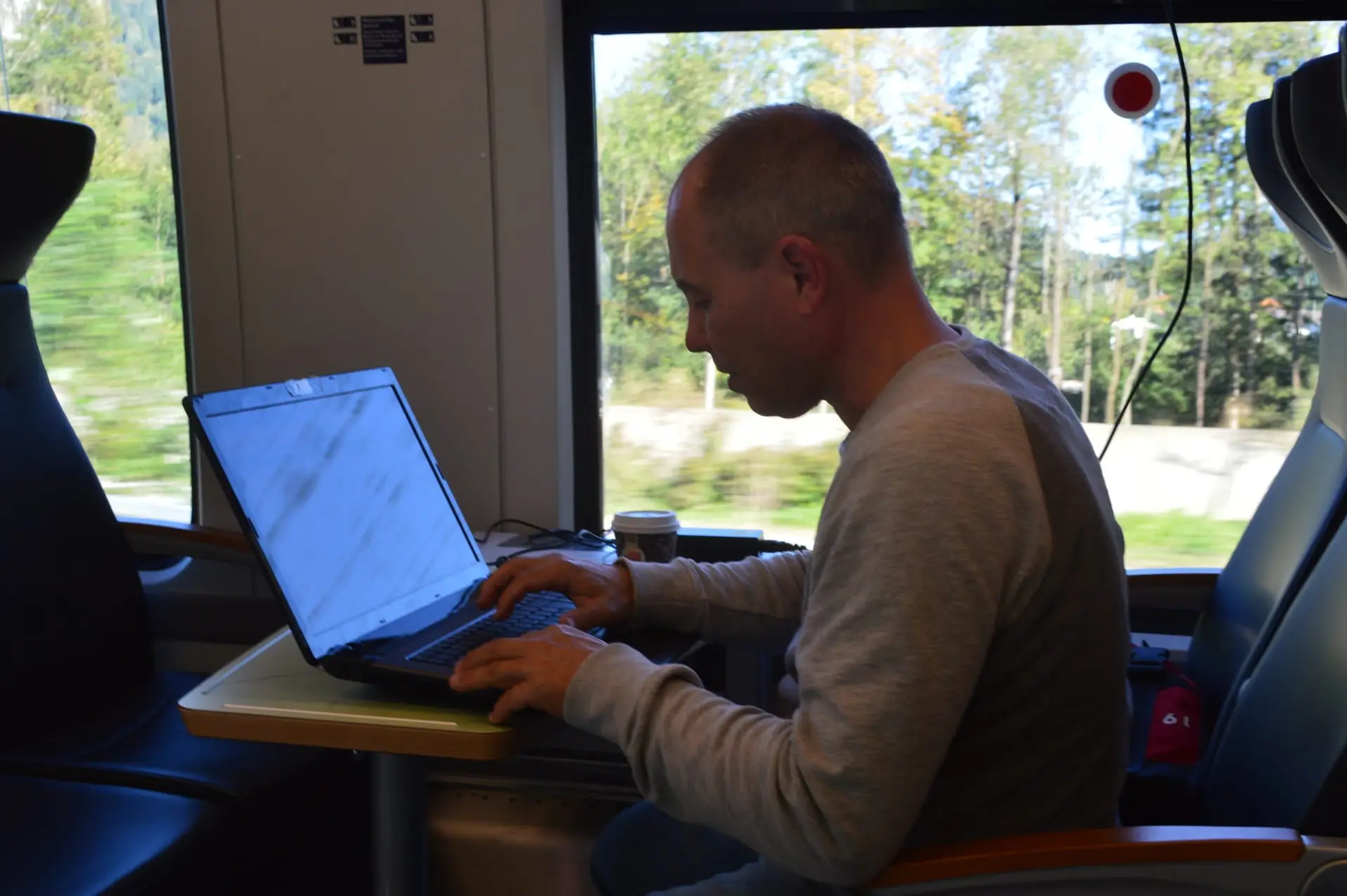
On my way back to Munich writing my first blog …
[clear]
[clear]
Documentation Center Nazi Rally Grounds
Oct. 18th, 2014
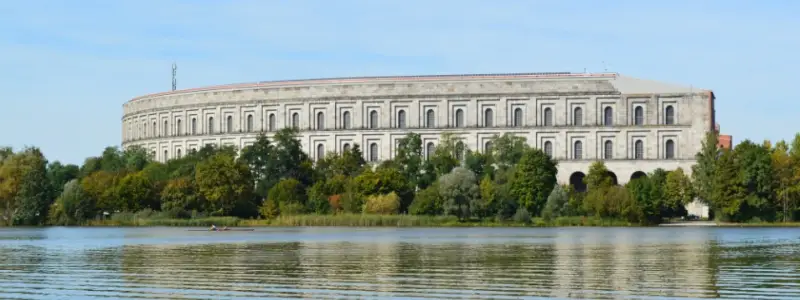
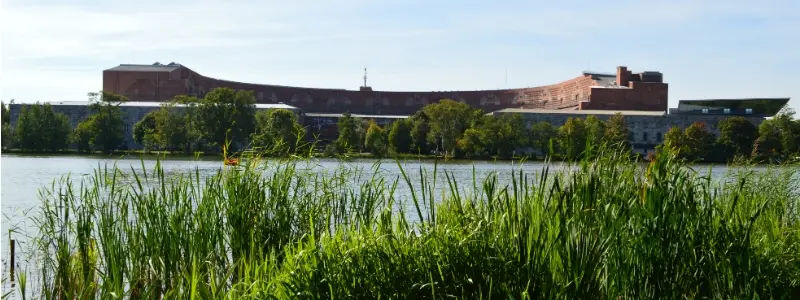
Congress Hall at Nazi Rally Grounds in Nuremberg/Germany
Nazi Rally Grounds. Nuremberg is widely known for its Christkindlesmarkt, but it also has many sights which are worth visiting such as the impressive Imperial Castle, medieval St. Lorenz Church or the Toy Museum. But Nuremberg once was “Stadt der Reichsparteitage” (City of The Party Rallies) – a fact which was not easy for the town to deal with … until they decided to use part of the monumental Congress Hall for the museum and documentation center which opened in 2001. The “Dokumentationszentrum Reichsparteitagsgelände” soon made it to No. 1 on TripAdvisor. To start with the review first – the documentation center is very well done – and even if you are interested in World War II only a little bit, you may consider a visit. Definitely, if you are already in Nuremberg or traveling along the Romantic Road (Nuremberg is just about an hour from Rothenburg ob der Tauber). This day trip is part of the 8-DAY HISTORY RAIL TOUR: “FASCINATION AND TERROR” – RISE AND FALL OF THE THIRD REICH.
How to get there
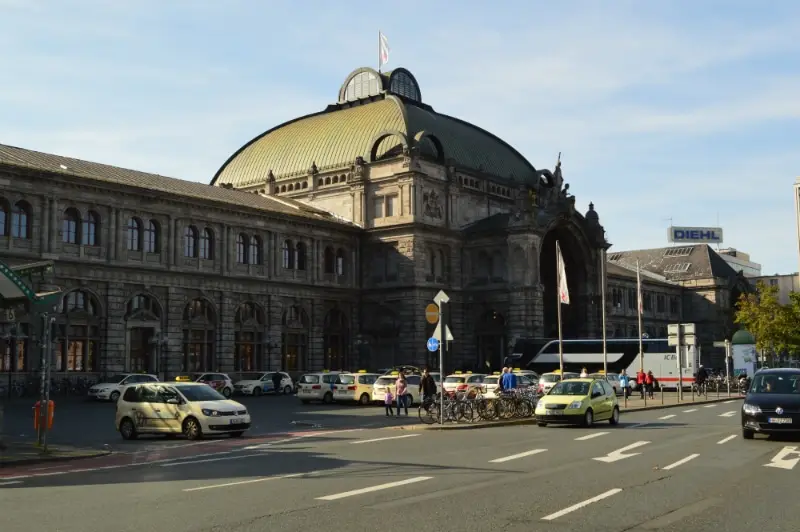
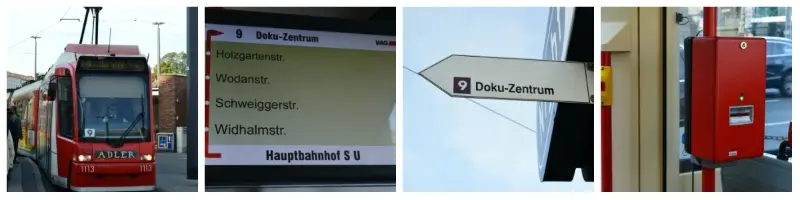
If you are traveling by car, there is plenty of parking available on the former Rally Grounds which are 1.5 mi south of the Old Town. If you arrive by train at Nuremberg Central Station a tram (tram number 9) departs from just outside the station and takes you directly to the entrance of the Documentation Center Nazi Rally Grounds which is located in the Congress Hall. There are signs pointing to the tram station saying “Doku-Zentrum”. One way fare is € 2.50 (a little more than US-$3) and you may also consider purchasing the day pass for unlimited free travel on the Nuremberg public transportation system which is € 5.30 (single ticket) or € 9.10 (for two adults)
[clear]
The Documentation Center
The entrance to the Documentation Center has a contemporary design which is quite different from the monumental design of the Congress Hall itself. It is located right at the tram station when you exit to your right.
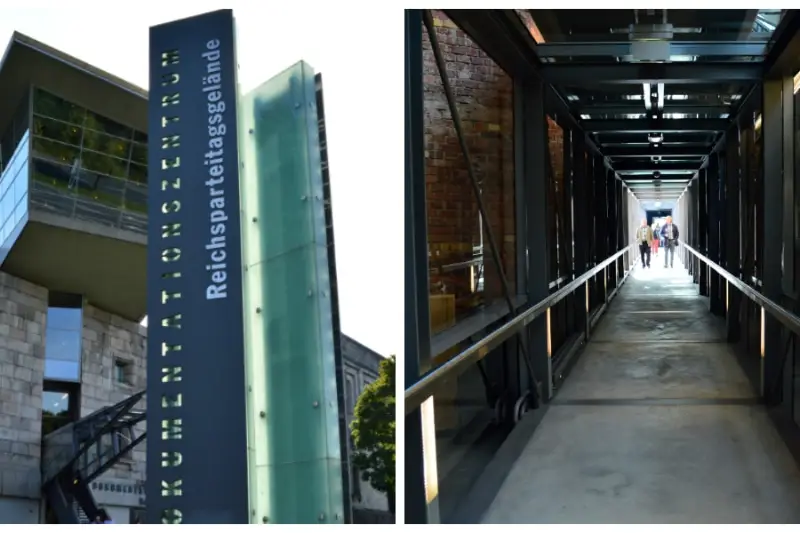
The entrance fee is € 5.00 per person and the fee already includes an audio guide which is available in English and in six other languages. For € 7.50 you may purchase a day pass museum ticket instead which makes sense if you plan to visit at least one additional museum in Nuremberg that day. There are lockers available which you may use free of charge. Also you find a cafeteria in the foyer of the Documentation Centre, where you can sit down for drinks and snacks.
Fascination and Terror
Its permanent exhibition “Faszination und Gewalt” (Fascination and Terror) is concerned with the causes, connections, and consequences of the Nazi movement in Germany. It is structured in a chronological order and first shows the fascination, extensively managed with means of modern marketing and media. The visitor will learn how the Nazis celebrated their movement in an “almost obscene fashion, presenting an appealing but false picture of their regime to the world” (as the documentation center states on their website).
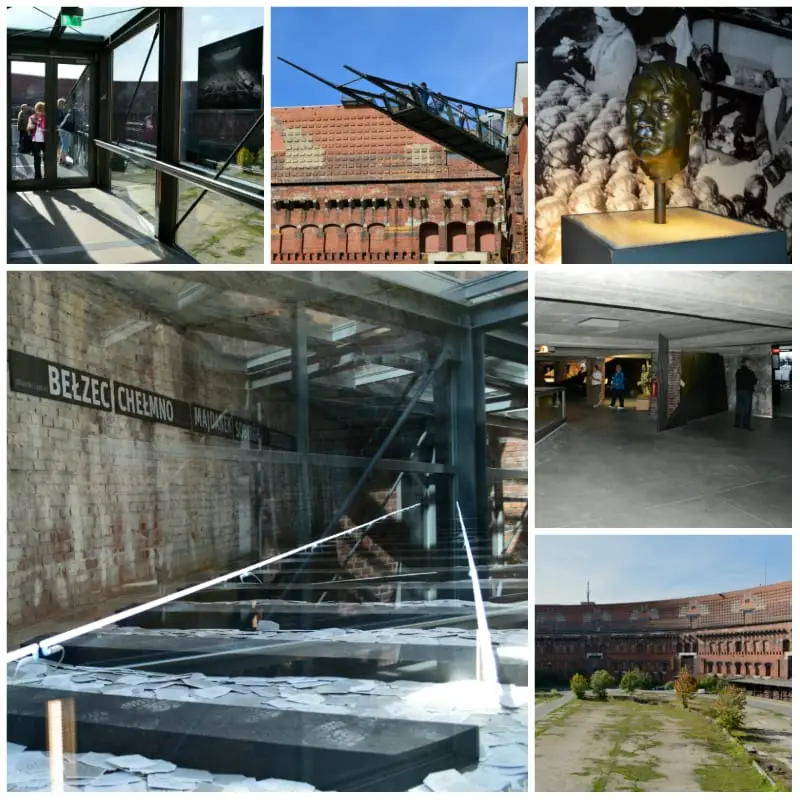
The museum also shows the personality cult around the “Führer” (leader) and how Hitler managed to become the undisputed leader. Fascination was created and fear was seeded. The exhibition then shows how critics and political opponents very fast became enemies to the “Volksgemeinschaft” (people’s community) and how they were eliminated by detaining them into the first Konzentrationslager (concentration camp) in Dachau, which was opened only a few months after Adolf Hitler became Reichskanzler (Chancellor).
Many films are shown in the exhibition and you probably need a total of about two to two and a half hours for your visit. This amount of time is needed for the documentation center itself – not for a visit to the Rally Grounds.
[clear]Nazi Rally Grounds
If you have the time (and the weather is nice) you may want to visit the enormous Rally Grounds by foot. There is no specific walking path but along the way, you will find several information boards with background information.
When you exit the Documentation Center to your left and walk along the lake “Grosser Dutzendteich” (the Congress Hall will be on your right) you will get to the “Grosse Strasse” (Great Road). The road is made out of granite, almost 1.2 mi long, and is leading towards the Imperial Castle to symbolize the connection to medieval times the Nazis saw themselves in.
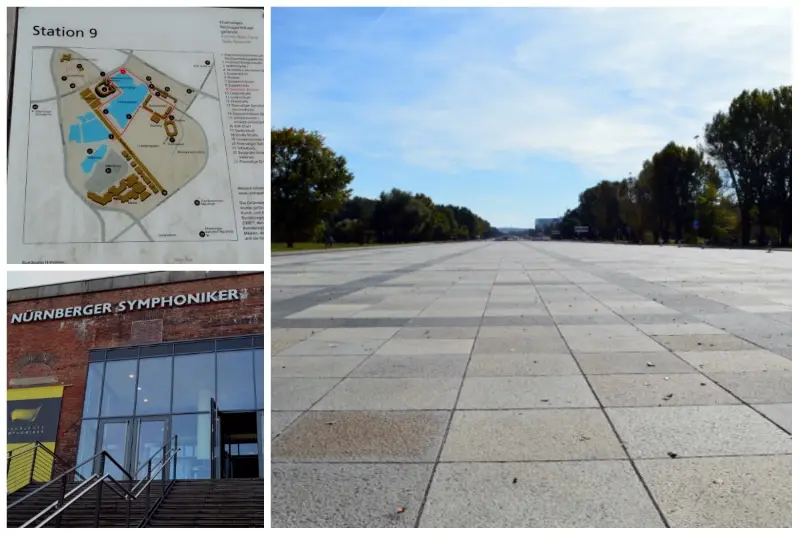
Make a left on the great road and follow the street until you pass the end of the lake and make a left towards the Zeppelinfield. The large Grandstand with a width of 390 yards is the work of Adolf Hitler’s favorite architect Albert Speer. Speer was inspired by the Pergamon Altar when he planned it. On top of the Grandstand was a large “Hakenkreuz” (Swastika) which was blown away by the Americans in 1945.
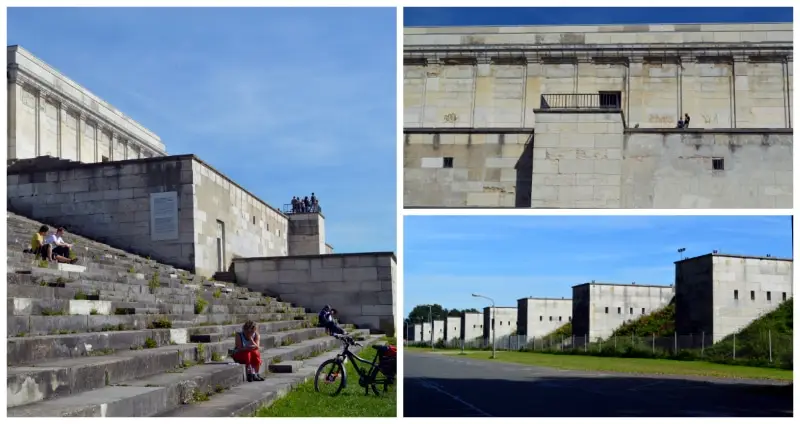
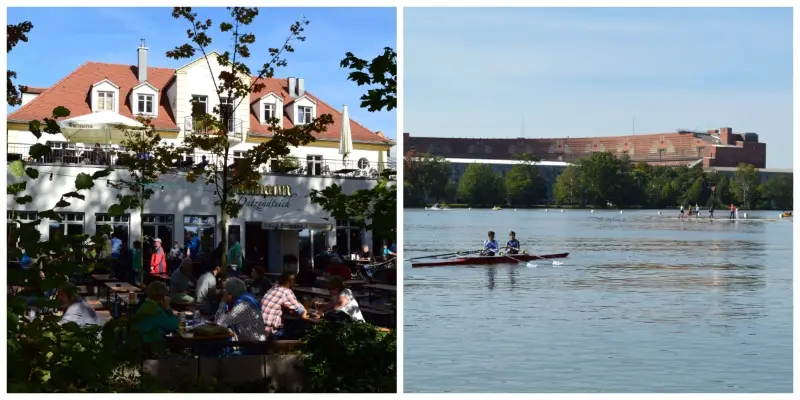
From the Zeppelinfield you can walk north towards the lake again and back to the tram station. You will pass the popular beer garden Gutmann am Dutzendteich along the way. Nowadays the former Nazi Rally Grounds is used as a recreation area for the residents of Nuremberg.
[clear]
[clear]
[clear]
Dachau Memorial Site – Day Trip By Rail From Munich
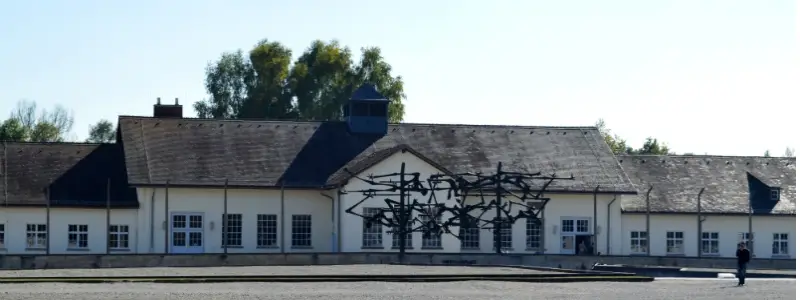
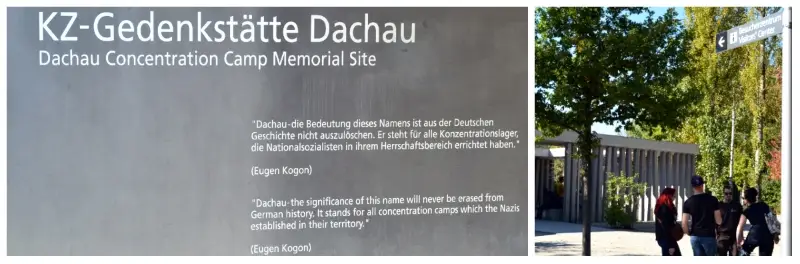
Dachau Memorial Site. KZ Dachau was the first Concentration Camp of Nazi Germany, soon erected after Hitler came in power in 1933. When Hitler became “Reichskanzler” (chancellor) he turned the paramilitary “Sturmabteilung” (SA), a division of the Nazi party to protect party assemblies, into regular police, which gave them the right to arrest political enemies without any reason. Very soon the prisons were overcrowded and Himmler had the idea to use unoccupied factory buildings located near Dachau (where he had worked in) as a prison. This day trip is part of the 9-DAY HISTORY RAIL TOUR: “FASCINATION AND TERROR” – RISE AND FALL OF THE THIRD REICH.
The Memorial Site can easily be visited from Munich by taking the commuter train “S2) (“S-Bahn”) to the Regional train to Dachau Station. The regional train only takes 11 minutes, the “S2” 21 minutes to get there. A local bus line (726) takes you from there to the entrance of the Memorial Site – the schedule of the bus is matched to the arrival of the trains.
From the station there are also signs which lead you to the Memorial Site (“KZ-Gedenkstätte”) if you prefer to walk and would like to follow the “Path of Remembrance”. The path follows the route the prisoners had to take when they were walking from the Dachau Railway Station to the entrance of the concentration camp. There are 11 information panels along the way. Walking time to follow the “Straße der KZ-Opfer” is about 45 minutes.
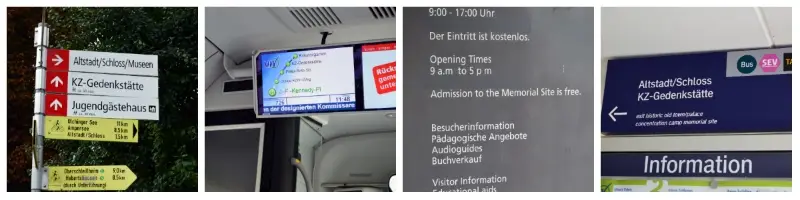
Admission to the Memorial Site is free. When you get to the Memorial Site you first want to visit the Visitor Center. There are scheduled English-speaking tours (daily at 11am and 1pm) for a small fee you can join and there is also the option to rent audio guides if you prefer to explore the memorial at your own time and pace. The audio guide is accompanied by a map of the area, and contains information about the grounds and history of the Dachau Concentration Camp, as well as accounts of historical witnesses. You should plan to spend about 2.5 to 3 hours to visit the site.
When you walk towards the gate (which used to be the main entrance of the KZ Dachau) you will see the former railway ramps. At the former entrance of the KZ you will find the iron gates with the slogan “Arbeit macht frei” – work makes (you) free.
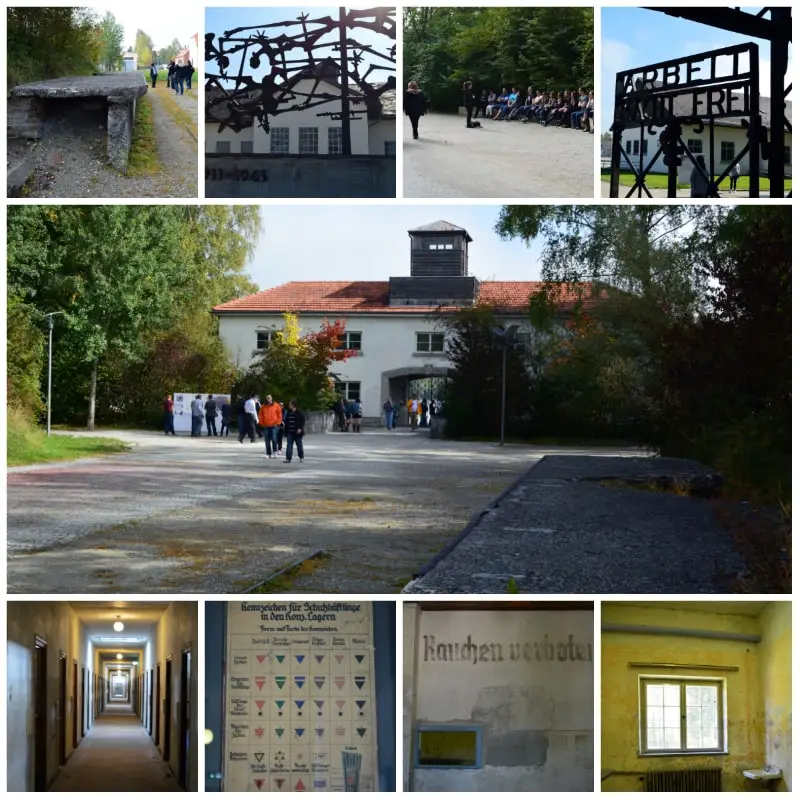
In the former maintenance building (which you find right behind the entrance gates) you find a permanent exhibition about the site and the prisoners. Here you can also watch the documentary film “The Dachau Concentration Camp” which takes 22 minutes. An English version is shown 10:00 am, 11:30 am, 12:30 pm, 2:00 pm and 3:00 pm.
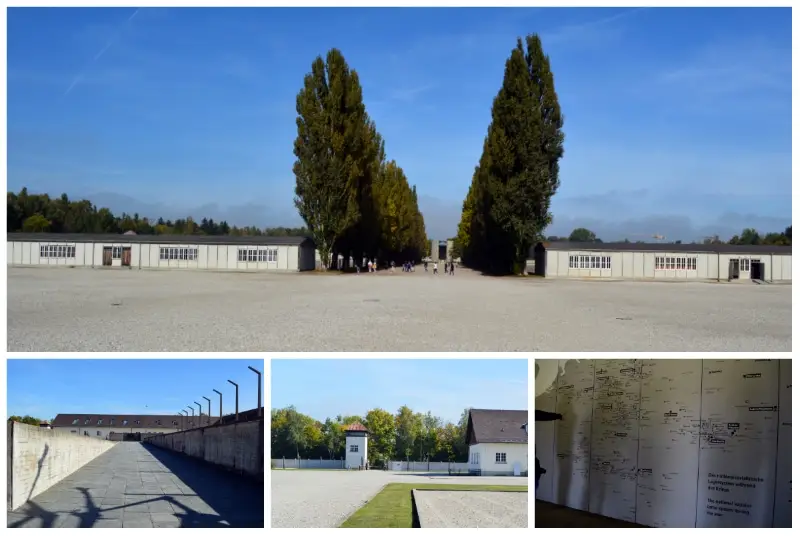
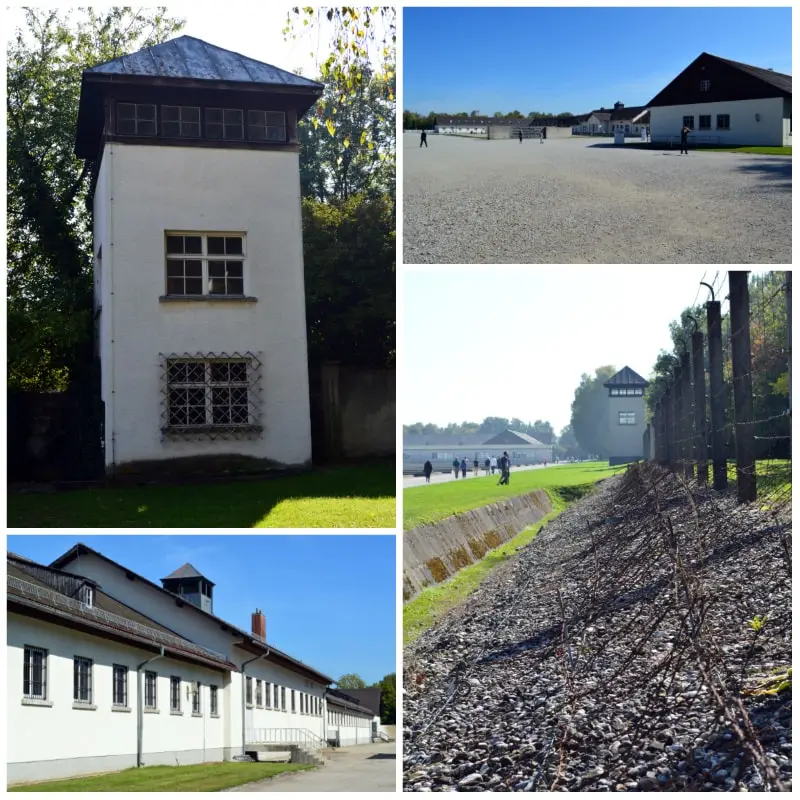
The “Camp Road” crosses the “Roll-call area” and leads to the barracks. Along the sides, you will see the guard towers and the security installations.
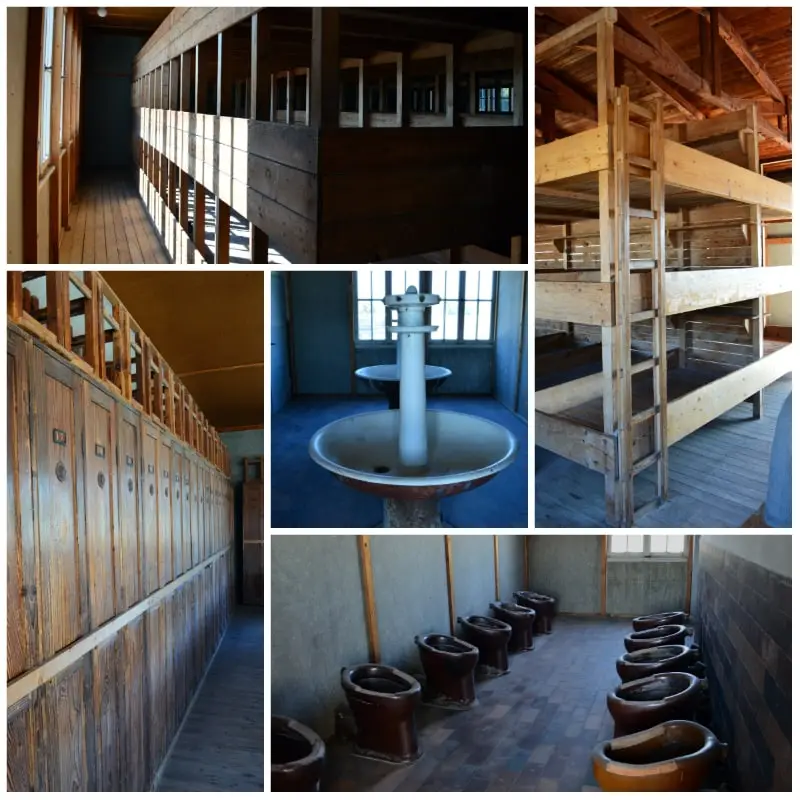
There are a few barracks which are open so you can take a look at the interior. Even without the many people which were packed in one barrack a visit of the inside gives you an idea under which circumstances the prisoners lived in the camp.
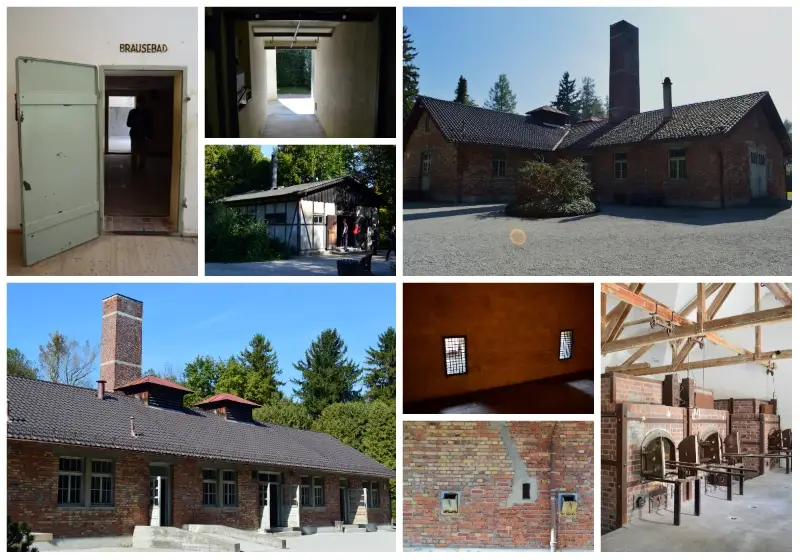
At the end of the Camp road, you find the Crematorium area. The area behind the buildings was used as an execution site used to shoot Soviet prisoners of war and Gestapo prisoners.
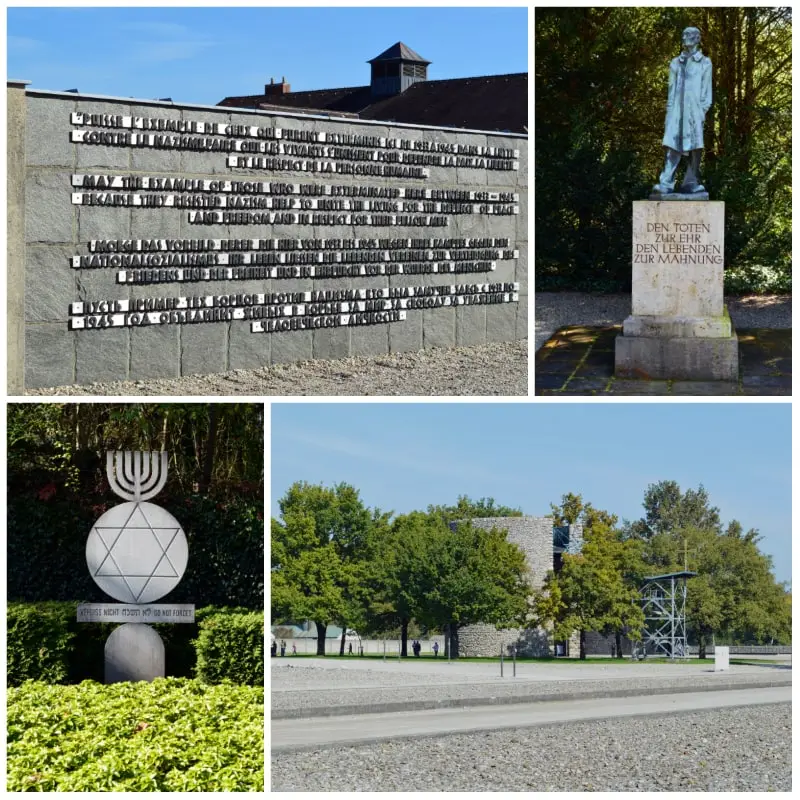
Today the area is the main place of remembrance and cemetery in the Dachau Concentration Camp Memorial Site.
Eagles Nest – Daytrip from Salzburg
Eagles Nest Daytrip. The Kehlsteinhaus, in English-speaking countries known as the “Eagles Nest”, was built for Adolf Hitler for his 50th birthday. It is an architectural masterpiece: the building on a rock on top of the mountain, a road cut into the mountain ending in front of a tunnel leading to a golden brass elevator through which one can reach the summit. Truly impressive and this is what it was supposed to be: to impress and dazzle people. This day trip is part of the 9-DAY HISTORY RAIL TOUR: “FASCINATION AND TERROR” – RISE AND FALL OF THE THIRD REICH.
How to get there
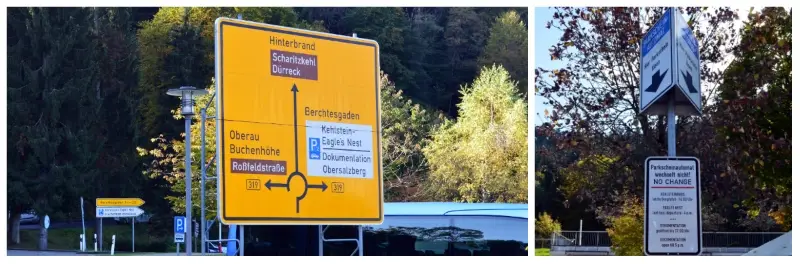
The Eagles Nest is situated on top of the Obersalzberg, where also the “Berghof”, formerly Hitler’s home and southern headquarters, was located. The building towering on the mountain peak 6.017 ft. above sea level remained unscathed during the war and today serves as a mountain restaurant. Eagles Nest is closed during winter; it opens mid-May and closes at the end October. If you a travel by car you may drive up to the parking lot “Dokumentationszentrum Obersalzberg” (Documentation Center Obersalzberg) from where you can take a two hour hike up to the Eagles Nest or you take a bus and the elevator.
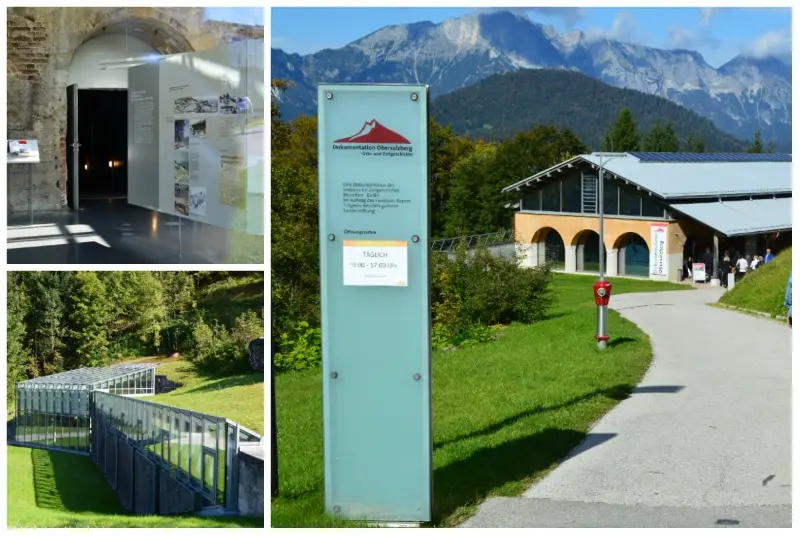
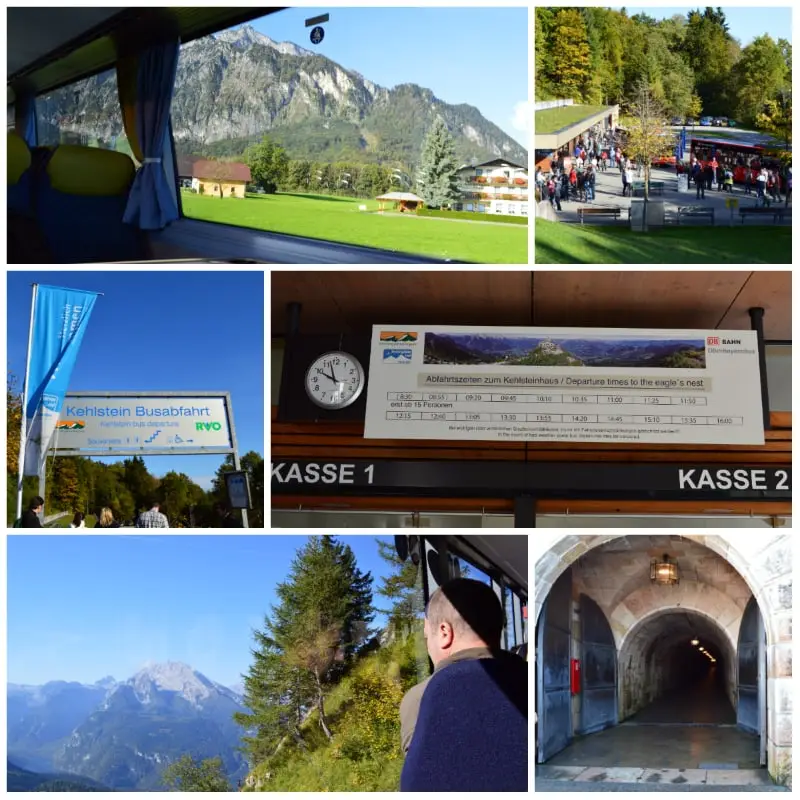
The documentation center is about 10 driving minutes from Berchtesgaden, from Munich you need about two hours, from Salzburg about 45 minutes, from Garmisch-Partenkirchen or Innsbruck about 2.5 hours to get there. Please note: when you pick up the ticket to go up the Obersalzberg you will have to let the person at the ticket counter know when you plan to go down again since they will schedule a time for taking the elevator and bus down again.
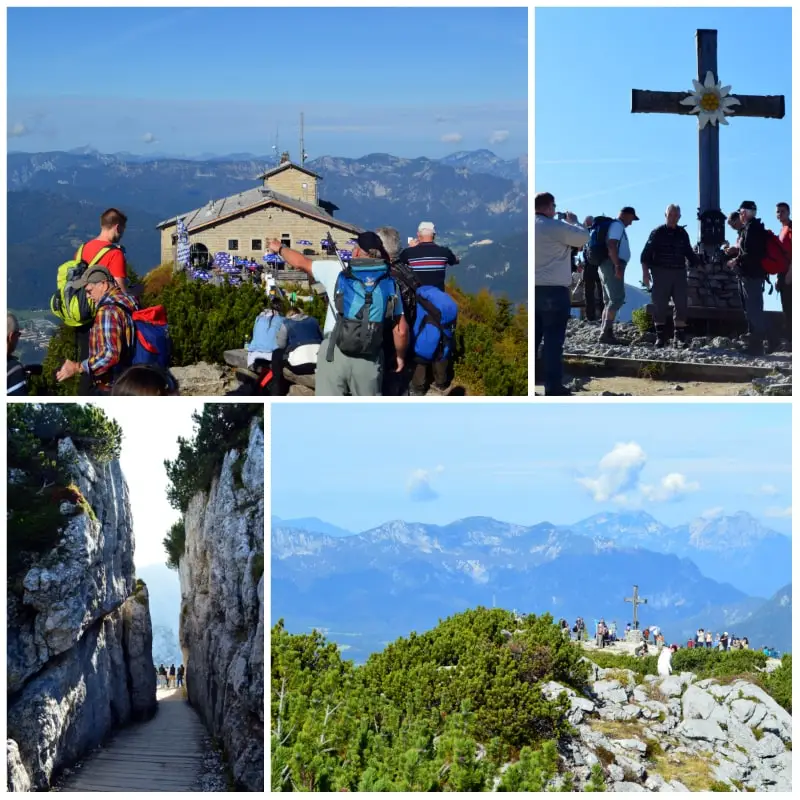
The easiest way to visit the Eagles Nest is by taking a guided tour from Salzburg. You will take a modern tour bus to the “Dokumentationszentrum Obersalzberg” (Documentation Center Obersalzberg) from where special buses take you to the elevator which takes you to the peak of the mountain.
Kehlsteinhaus / Eagles Nest
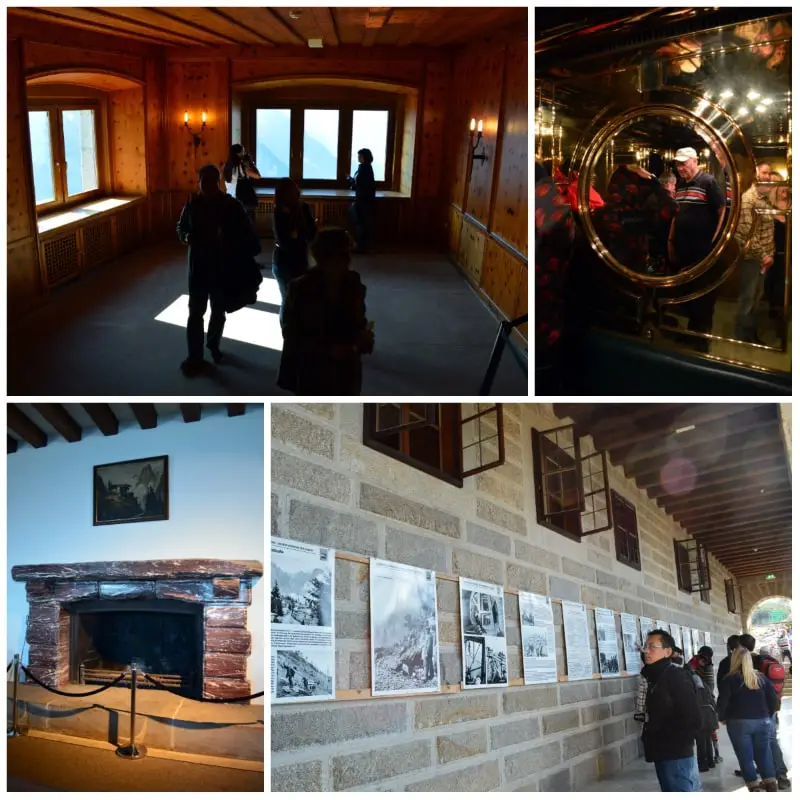
When you exit the elevator you are already inside of the Kehlsteinhaus which today is a restaurant. On the picture below you see the fireplace which is located in one of the dining rooms – made out of red marble – which was a present from Italian Dictator Benito Mussolini. Also, you see the wooden paneled tea room with great views of the mountain area. Outside of the building, you will find displays with information about the history of the building and pictures.
Hike on top of the Mountain
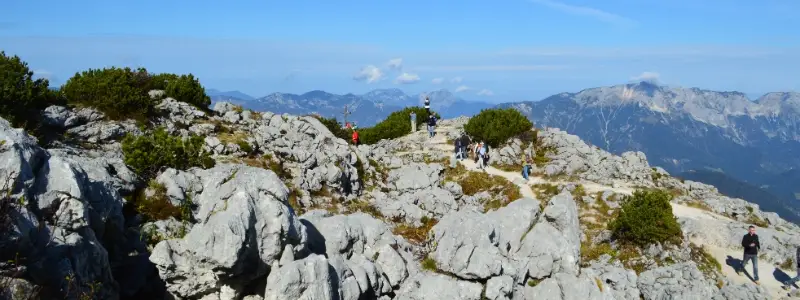
If the weather is nice you may want to take a short hike on the mountain which offers great mountain views as well as a nice view of the Koenigssee.
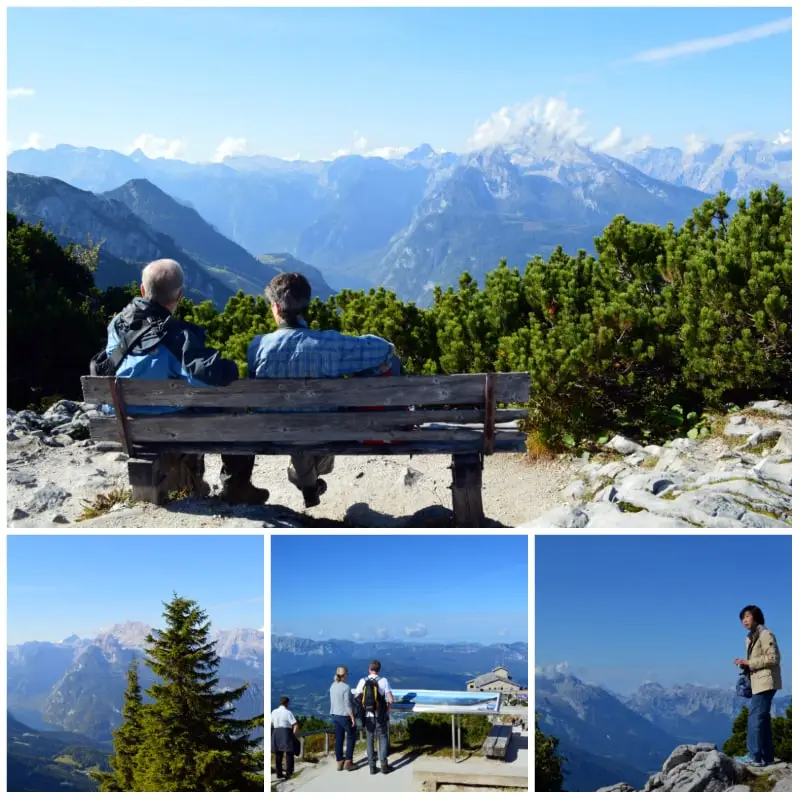
If you want to explore the area by hiking on top of the mountain you need about 1.5 hour to enjoy the area. There are benches to relax and enjoy the great views and displays with information about the peaks surrounding Eagles Nest.
Berghof
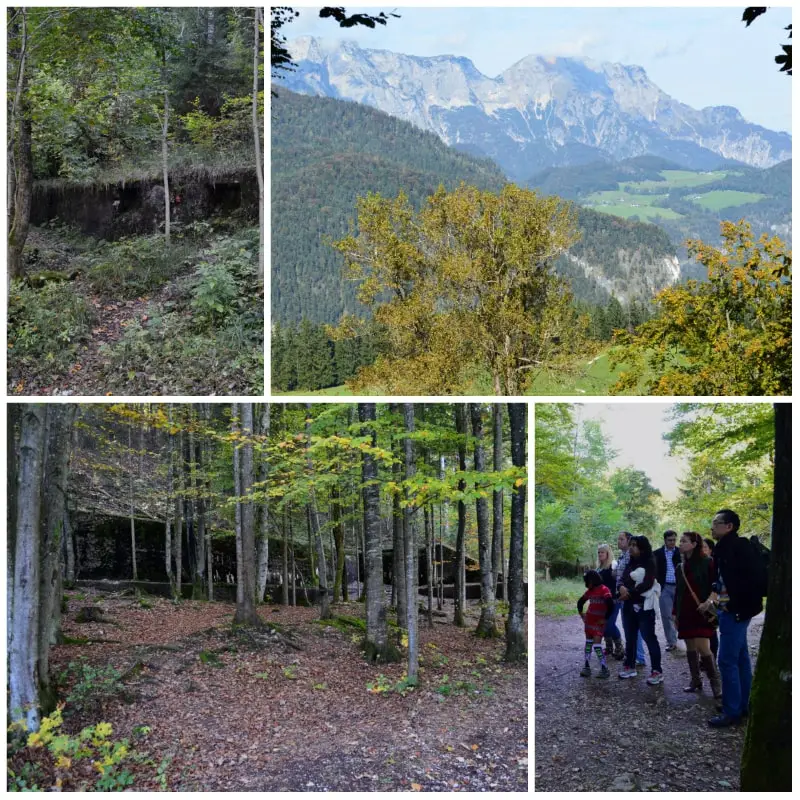
When you are back at the Documentation Center you may take a short walk (passing the glazed entrance to the bunker) to the area where the “Berghof” was situated. The Berghof is considered Adolf Hitler´s home since he spent more time there than anywhere else during the war. It was damaged by British bombs in April 1945 and demolished in 1952 by the State of Bavaria. Only the top of a retaining wall can still be seen, trees have overgrown the site. From where the large terrace used to be, you have a nice view of the valley and you also will see the hill where the Teahouse used to be. Hitler almost every day after lunch took a walk from the Berghof to the Teahouse.
Day trip to scenic Lake Titisee and into the Black Forest
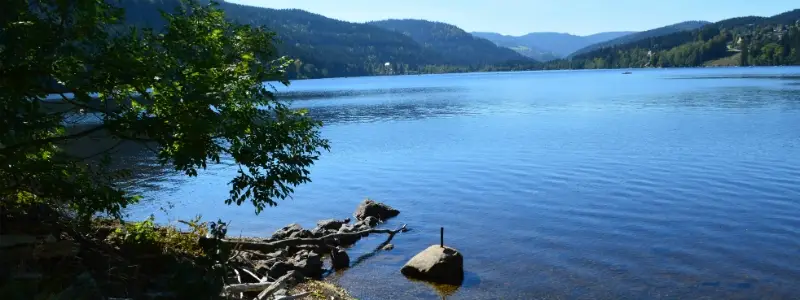
Lake Titisee Black Forest Day Trip. Freiburg is the gateway into the Black Forest. And since Freiburg is connected to the High-speed “ICE” Rail system in Germany, it is pretty easy to arrange a day trip by rail into the beautiful Black Forest and to scenic Lake Titisee from Frankfurt or Heidelberg for example.
So if you are interested to add the day trip into the Black Forest to our 9 Day Germany & Austria Rail Circle tour for example, we just add a night in Heidelberg and the rail tickets and information needed to add this beautiful day tour into your itinerary.
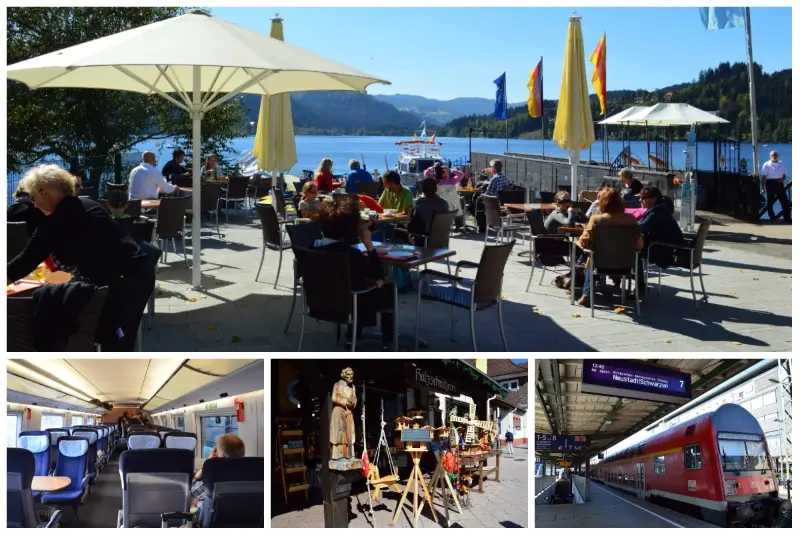
When you get to Freiburg Central station you take the regional train into the “Hollental” (Hells Valley) for a scenic train ride to Lake Titisee. Travel time is about 40 minutes. The village of Titisee itself is small; just about 2,000 people live at the lake. However, there is a wide variety of restaurants, shops, boat rental places, etc.
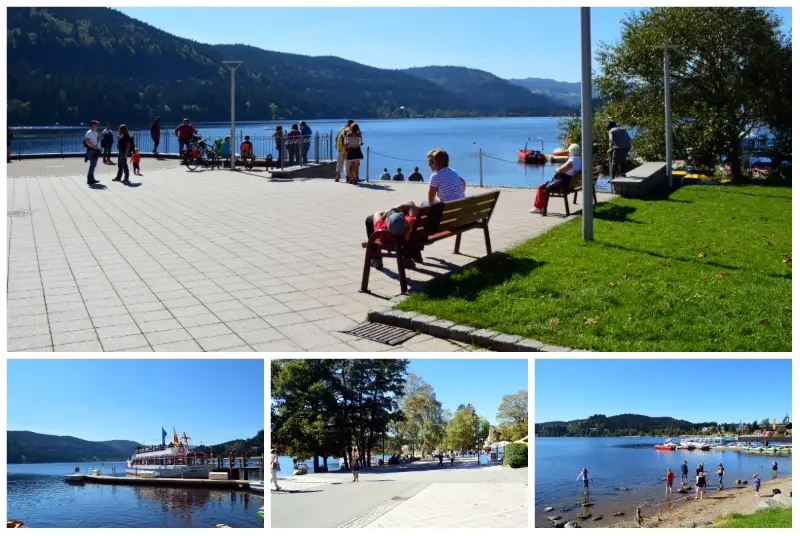
You can take a boat ride on the lake on a cruise ship or you can rent a rowboat, a paddleboat or an electrical boat. Another option is to go for a hike which is very nice.
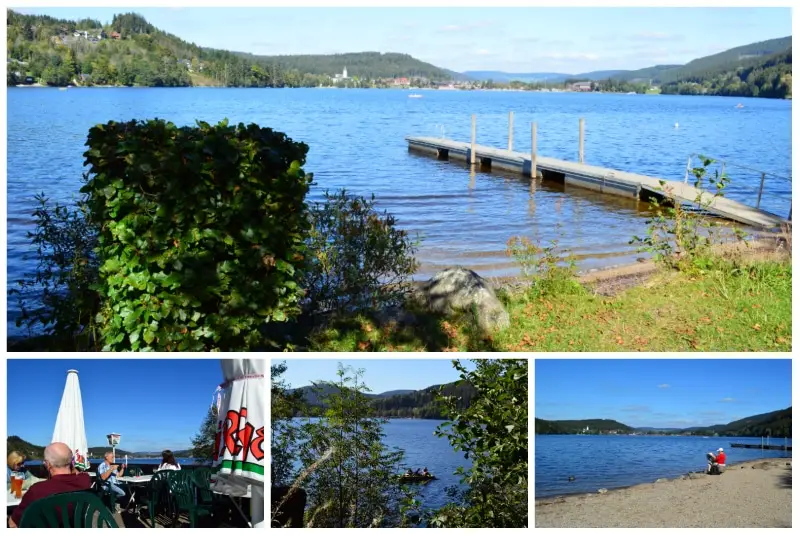
If you want to go for a hike you have two options: you may follow the shore around the lake or you can first follow the northern shore of Lake Titisee and then hike through the Black Forest to the town of Hinterzarten.
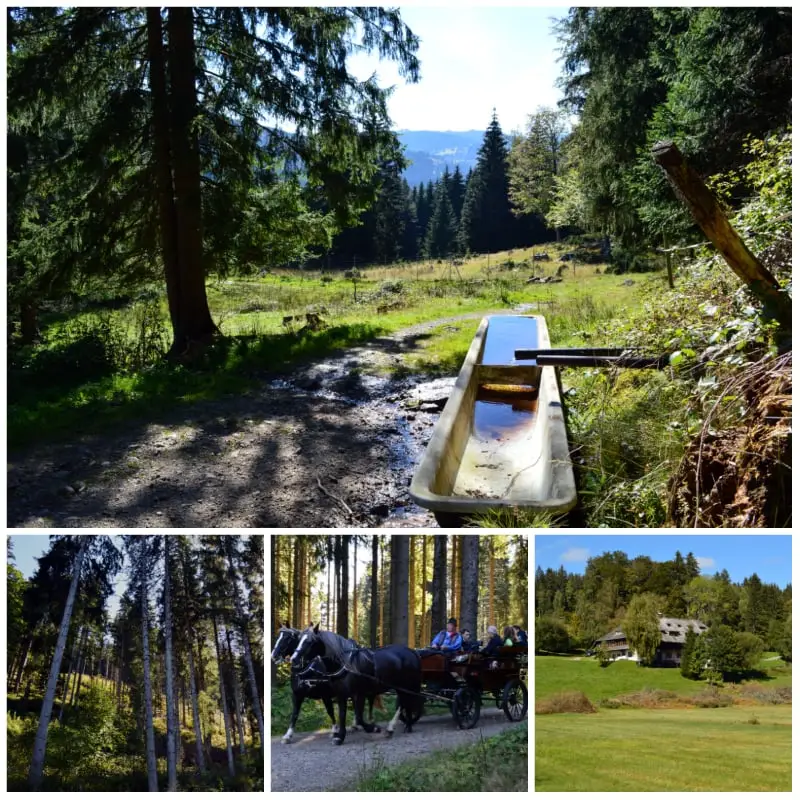
The hike around the lake takes about three hours. At two campgrounds which are located about half way around the lake you will find small restaurants where you can get something to eat – the famous Schwarzwalder Schinken (Black Forest smoked ham) and/or the Schwarzwalder Kirschtorte (Black Forest Cake).
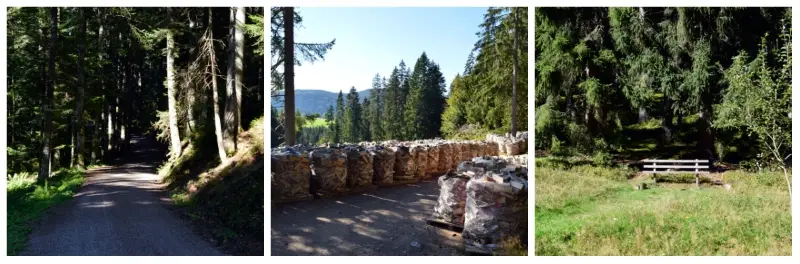
It takes about 2.5 to 3 hours from Lake Titisee to Hinterzarten. Hinterzarten is only a little larger than Titisee. The village is known for its ski jump, the “Adlerschanze”. Many famous ski jumpers are from Hinterzarten, Sven Hannawald for example, who won a silver medal at the ski jumping world championships in Oberstdorf and a silver medal at the Olympic Games in Nagano. In Hinterzarten you will find restaurants and cafeterias, the train takes about 30 minutes back to Freiburg from where you can catch the high-speed ICE.
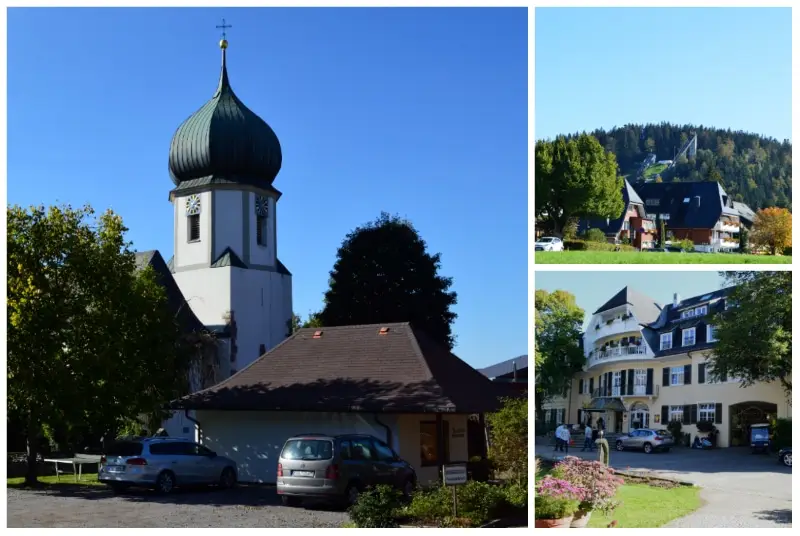
If you would like to extend one of our rail tours by adding this day trip to Lake Titisee and into the Black Forest please contact us for details and options on how this can be arranged. A great day trip is waiting for you!